
San Joaquin County Previous Residents Sources
A one-address house history needs a source for land, a source for people, and a source for physical change. The following coverage map keeps current parcel work separate from older household evidence and shows where each access route begins.
| Source | Years It Covers | Where Held | What It Shows |
|---|---|---|---|
| Recorded documents | 1851 to present research universe | San Joaquin County Recorder | Parties, instrument type, dates, document numbers, and legal descriptions |
| Assessment roll and GIS | Current resources | Assessor and San Joaquin GIS | APN, situs, parcel shape, map reference, and releasable roll fields |
| Official county archives | 1850 to 1990 | Historical Museum | Assessment, plat, administrative, planning, and historical registry context |
| City and county directories | 1852 to 1980 | Historical Museum and Chavez Central | Names, occupations, addresses, and listed household clues |
| Stockton newspapers | From 1850, nearly complete holdings described | Chavez Central | Obituaries, transfers, social notices, and former-address clues |
| Federal population census | 1850 to 1950 publicly accessible | NARA, FamilySearch, or library access | Households, relationships, and enumeration addresses |
| Sanborn and map or aerial holdings | 1895 digital atlas; 1860 to 1990 museum holdings | Library of Congress and Historical Museum | Building footprint, street context, and land-use change |
| Permits and planning files | Date span not located in official sources | Relevant municipality or county | Construction, applicant, contractor, inspection, and final-date clues |
Use the current parcel as the anchor for recent ownership. Use the directory and census rows for past residents, then use newspapers, probate, and maps to explain a gap. Permit access is jurisdiction-specific, and the research did not locate a stable public permit-search interface.
San Joaquin County Parcel for Residents
Begin with the lawful Assessor and GIS channels, not yesterday’s street number. Record the APN, legal description, situs address, parcel boundaries, and map reference. The San Joaquin County Assessor and San Joaquin GIS viewer are the starting points for translating an address into a parcel. The research did not verify an unrestricted owner-name search on the official public landing pages.
| Address search | Use the address text or geocoder to navigate to a situs; exact syntax should be checked in the live interface. |
|---|---|
| APN | Use the parcel number for a parcel-specific lookup and for the transition to Recorder research. |
| Map navigation | Zoom and pan to the block, then click the subject parcel and record its APN. |
| Layers and basemap | Review exposed parcel, boundary, thematic, aerial, or street context without treating a map as a survey. |
| Print or map output | Preserve the map context and date used to identify adjacent parcels. |
Situs means where the land is located. The owner mailing address is where tax notices go. They are separate fields. A matching pair can support a lead, but neither field alone proves that the owner lived at the parcel. Assessment values are figures for the roll, not a market-price conclusion.
Note: The GIS control names and any owner-name or ZIP filters require live verification; do not turn an unverified interface feature into a promised search method.
Trace San Joaquin County Residents Through Deeds
The Recorder’s self-service portal and grantor-grantee system connect people to deeds, deeds of trust, liens, releases, maps, decrees, and other recorded instruments. The office describes research across 168 document types dating to 1851. Begin with the current owner and legal description, then move backward by party and parcel rather than trusting a modern address to remain unchanged.
- Capture the current assessed owner, APN, and legal description from the Assessor channel.
- Search that owner as grantee in the Recorder index and identify the acquisition document.
- Record the grantor, grantee, recording date, document number, instrument type, and matching legal description.
- Search the grantor as an earlier grantee and compare the legal description or APN lineage.
- Repeat backward until the web result or image ends, then use the office index, books, or counter research.
- Keep each link in date order and reject a same-surname match unless the parcel description and chronology agree.
- Grantor
- The party conveying an interest or signing the instrument that transfers or affects the property.
- Grantee
- The party receiving the conveyed interest or appearing as the recipient in the instrument.
- Chain of title
- The linked sequence of recorded transfers used to trace an interest from one owner or party to an earlier one.
- Legal description
- The formal land description used in the instrument. It is often more stable than a street number when addresses change.
The office’s online self-service availability varies by record and image. A precise web-image cutoff was not stated. Documents received by 4:00 p.m. are recorded that day, while documents received by 4:30 p.m. are recorded the next business day, after which content becomes available online. For an older gap, call 209-468-3939 or use the Recorder counter rather than guessing how far the online view reaches.
San Joaquin County Residents: Owners and Occupants
Ownership and occupancy answer different questions. A deed identifies parties to a recorded instrument. A city directory, criss-cross section, census schedule, newspaper, or permit may identify a person connected to the address without proving title. The Assessor’s situs field locates the parcel, while a mailing field routes a tax notice. A different mailing address may reflect an absentee owner or only a mailing preference.
Building characteristics can help date a structure, but they do not identify every person who lived there. Reverse directories record the publisher’s listed occupant, and census schedules record a household at an enumeration visit. Treat each as a dated observation. Compare names, spouse or family clues, address wording, and dates before joining a person to the house history.
Lawful house history. Previous-resident research in San Joaquin County is suitable for family history, personal curiosity, and understanding a building’s past. Do not use a name or address trail to stalk, harass, threaten, or track a living person.
Note: A deed chain can be complete while the occupant trail remains partial, and a directory trail can be rich while title records remain silent about the household.
San Joaquin County Directory Trail
The Historical Museum’s verified city and county directory span runs from 1852 to 1980. The collection is the bridge between a parcel history and the people recorded at an address. It includes names, occupations, and addresses, while the criss-cross section can reverse the lookup from a street to a listed occupant. The exact publisher and volume sequence must be confirmed with the Museum rather than assumed.
The collection shelves and entry-reading method belong with the San Joaquin County city directory collections. For past residents, copy the name line and address, record the abbreviation key, then compare the same address in an earlier and later volume. Chavez Central’s city, telephone, and yearbook holdings are a second local access channel when a museum appointment is not yet available.
The Historical Museum reference library is non-circulating and appointment only at 11793 N. Micke Grove Road, Lodi. Call 209-331-2055 or email info@sanjoaquinhistory.org. Chavez Central is at 605 N. El Dorado Street, Stockton, with a second-floor non-circulating Local History and Genealogy Collection.
Previous Residents in San Joaquin County Maps
The free digital 1895 Stockton Sanborn atlas contains 85 sheets. It can test whether a building footprint, street line, or numbered address fits the period being studied. It does not name every resident. The Historical Museum’s maps and aerial photographs extend from 1860 to 1990 and include Stockton, Lodi, and Clements Sanborn maps.
Use a map after the deed chain has produced a legal description or after a directory has supplied an address. Compare the structure and street context with later aerials, subdivision or plat references, and permit dates. A map can show continuity or change, but it cannot turn a footprint into proof of occupancy.
Address numbers are not fixed across every era. The research identifies the legal description, subdivision map, and directory abbreviation key as the bridge when a modern number does not match an older entry. Rural and Delta parcels may use islands, districts, or routes instead of a modern numbered street.
San Joaquin County Residents and Census
Directory years and census years work best as paired snapshots. The public federal population schedules run through 1950 as of 2026 under the 72-year rule; the 1960 schedule becomes public in 2032. A census can add relationships and household structure, while a city directory can supply a more frequent address clue. Neither source alone proves an unbroken stay.
- Copy the address and every name from a directory edition before searching the census.
- Choose the nearest public census year and test street spelling, house number, surname, and household relationships.
- Compare the census enumeration address with the directory’s residence line, allowing for spelling and numbering changes.
- Use the next directory volume to test whether the household remained, moved, or split into another entry.
- Check newspapers, probate, deed or mailing data, and name variants when one source ends.
The eight local yearbook collections also provide a human-use route for classmates and relatives: Stockton, Lodi, Tokay, Ripon, Tracy, Lincoln, St. Mary’s, and Edison. A yearbook name can anchor a directory search even when a household entry is abbreviated.
San Joaquin County Resident History in Permits
Stockton’s Building and Life Safety Division issues building permits and performs inspections. Planning handles zoning and land-use permits. An address-keyed permit file may show construction dates, contractor names, owner or applicant names, project valuation, status, inspections, and a final date. It does not prove who occupied the building. Stockton City Clerk records are at 425 N. El Dorado Street, and a focused California Public Records Act request can state the address or APN, record type, date interval, department, and preferred electronic format.
For a parcel outside Stockton, use the relevant city or county department. Stockton permits and council records do not cover a Lodi parcel. A precise phone or counter question should identify the address, APN if known, permit type, and approximate year. Ask where the file is indexed and request an existing permit row, card, inspection, code case, or final record rather than asking staff to create an unlimited history.
The research did not locate a stable public Stockton permit-search interface or a complete searchable local business-license register. Older municipal facts may move to Chavez Central newspaper microfilm or Historical Museum infrastructure, planning, map, and archive collections. Keep the request number when using a city submission channel.
Obituaries for San Joaquin County Past Residents
Chavez Central’s Stockton newspaper microfilm begins in 1850 and is described as nearly complete. View, print, email, or save the image to USB, then use the obituary or vital notice to test relatives, former addresses, and an estate clue. The subject index covers many, but not all, years, and the library offers an obituary copy-request service.
Probate and estate clues belong with the Superior Court record route. The San Joaquin Superior Court Case Management Search can provide locator information, while Records Management handles viewing and ordering court files. A court copy request uses the CR-109-RM-1 form when a written search or copy is needed.
Vital records are a separate access path. The County Recorder issues county birth and death records for all years and public marriage records; the County Clerk supplies confidential marriage records; the local registrar holds current and prior-year births and deaths; CDPH Vital Records provides a statewide mail fallback. Authorized copies require the eligible relationship or authority and a notarized sworn statement. Informational copies are generally available but cannot establish identity, and confidential marriage records are limited to a spouse or court order.
A California vital-records fee notice gives the current fee context for a document request.
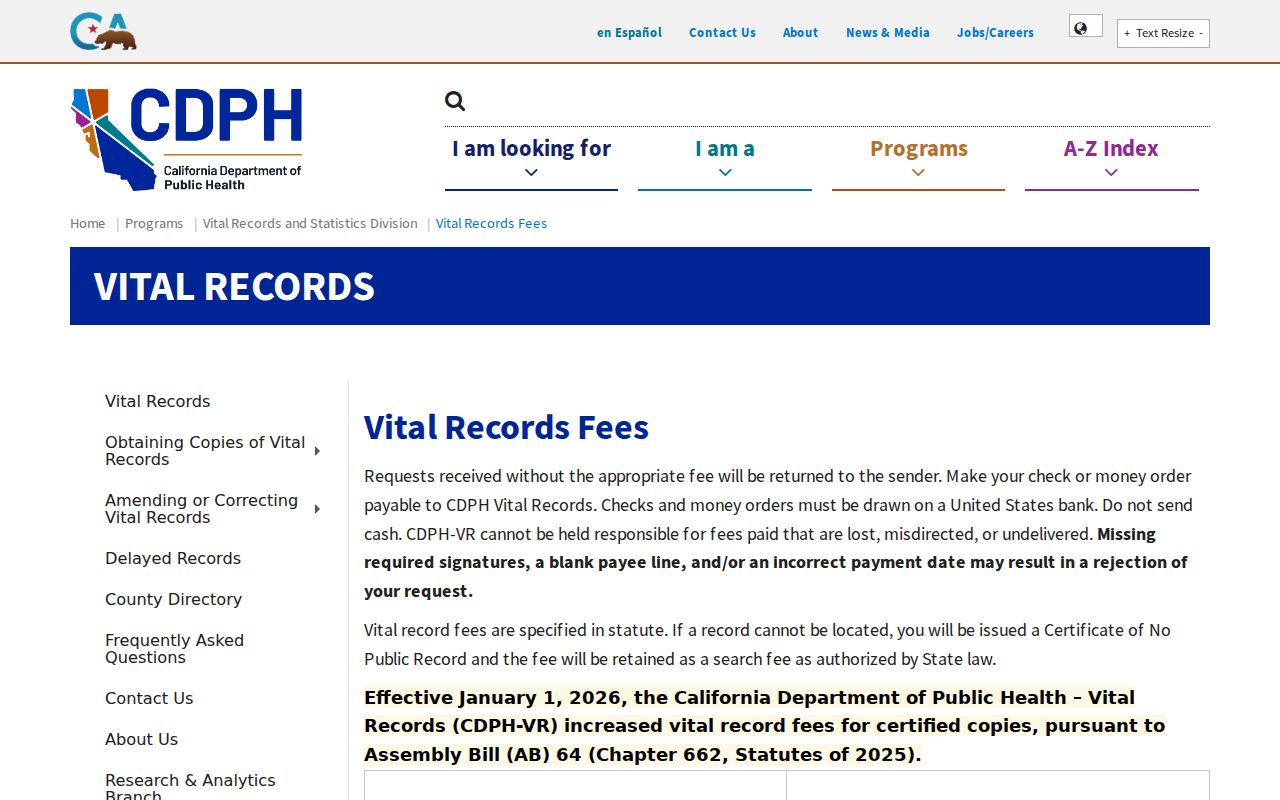
The fee image belongs beside the access rule, not as a promise that every historical copy is available to every requester. Check the custodian and copy type before sending a request.
San Joaquin County Safe Address Records
Some previous-resident trails are expected to contain a gap. California’s Safe at Home program provides a confidential voter registration and substitute address under Government Code sections 6205 through 6216. A substitute address can keep a living participant from appearing in the ordinary address trail. The program’s treatment of voter records and deeds should be checked before interpreting an absent name as a move or death.
The California Safe at Home guidance describes eligibility, substitute-address use, voter treatment, and program limits.
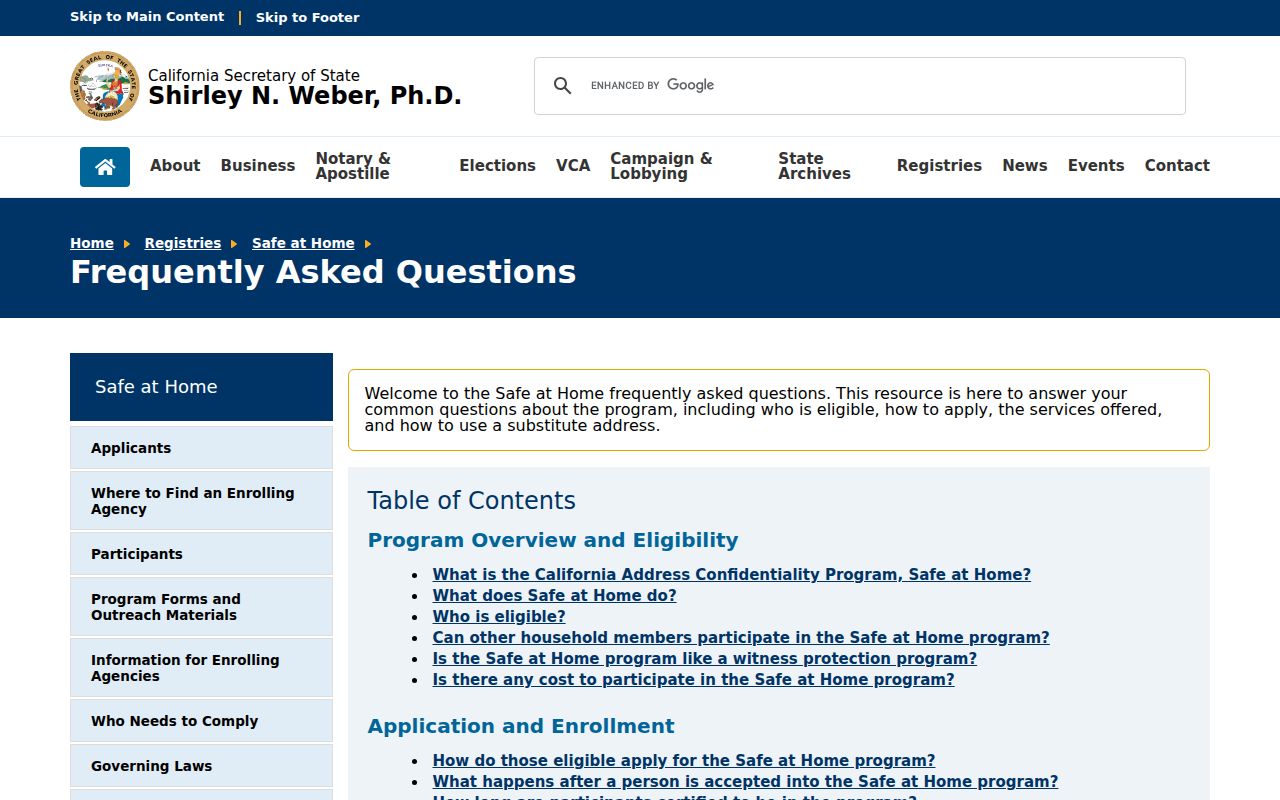
That image is a reminder to report a research gap instead of filling it with a guess. Protected records, restricted vital copies, sealed material, missing permit indexes, and the unstated Recorder web-image cutoff can all interrupt an otherwise careful house history.
Note: A missing living person from a public address source is not evidence that the person never lived there.