
How San Joaquin County Residents Are Found
San Joaquin County has no single current roll that answers every resident question. Stockton, Lodi, Manteca, Tracy, Ripon, Escalon, Lathrop, and unincorporated communities keep some records at the city level, while the Assessor, Recorder, Superior Court, and Registrar of Voters serve the county. Begin with the kind of fact needed. A parcel clue points to GIS and assessment records. A former household points to directories, census schedules, newspapers, and deeds. A person’s own registration status must go through California’s authenticated voter form.
The official trail can connect a name with a parcel, a recorded instrument, a court case, a business filing, or a historical address. It does not turn an owner into a confirmed occupant. A directory entry records a publisher’s canvass, and a court index is not a case file. Those distinctions keep a San Joaquin County residents directory useful for genealogy, family history, reconnecting, and civic research.
- Use the county GIS map or Assessor resources to translate an address into an APN and situs.
- Follow the APN or legal description into the Recorder self-service portal.
- Use My Voter Status only for the voter’s own authenticated lookup, or qualify for a voter-file request.
- Test a name against the Superior Court index, vital-record route, business or license file, and historical collections that fit the question.
- Ask the actual custodian for a narrow request when the online result ends, keeping the address, APN, date range, and record type precise.
San Joaquin County Records Offices
Stockton is the county seat and the main counter location. The Assessor-Recorder-County Clerk at 44 N. San Joaquin Street separates parcel and recording work into different suites and services. The Recorder Division researches 168 document types dating to 1851. The Assessor supplies parcel maps, values, characteristics, and mailing and situs fields. The Registrar of Voters controls the approved voter-file route, while My Voter Status is a self-service authentication tool rather than an open name list.
These offices answer different questions. A Recorder index shows a party to an instrument, not everyone in a house. An assessment screen describes land and its roll fields, not every occupant. Court and vital-record access follows separate rules. Linking the right office to the right clue is the central discipline of a San Joaquin County residents directory.
San Joaquin County Recorder
44 N. San Joaquin Street, Suite 260
Stockton, CA
209-468-3939
Recorder records and maps
San Joaquin County Assessor
44 N. San Joaquin Street, Suite 230
Stockton, CA
209-468-2630
Assessor property information
Registrar of Voters
44 N. San Joaquin Street
Stockton, CA
209-468-8683
County elections office
The Recorder’s same-day workflow applies to documents received by the published cutoff, but historical research can still require counter indexes and books. The Assessor’s public map and screen are useful starting points; priced roll extracts and property characteristics follow a different access path.
Here is the combined Assessor-Recorder-County Clerk information page in its own words and image, including the division’s current service descriptions.
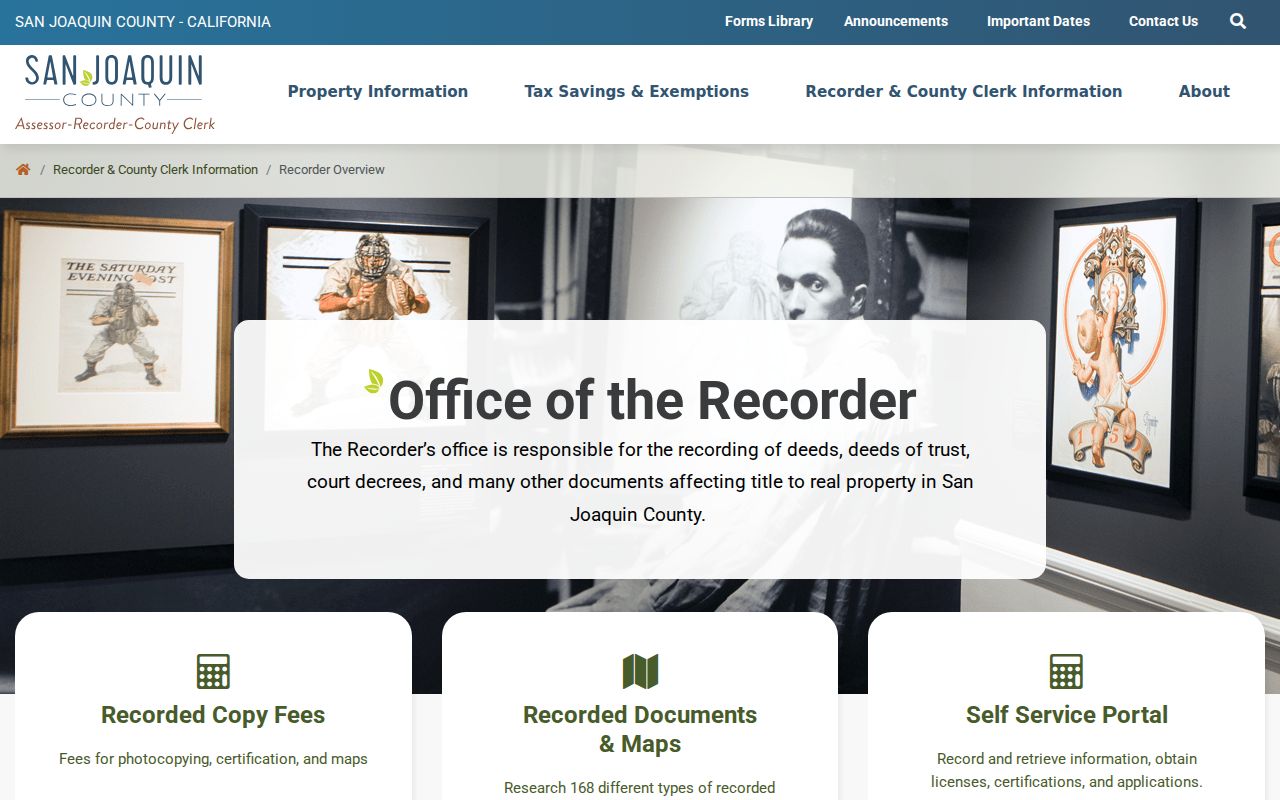
The Recorder image is a starting signpost, not a substitute for checking the index, requesting a copy, or confirming a restriction with the custodian.
San Joaquin County Resident Search Clues
A name, street, APN, and historical address produce different first moves. If the clue is a street, use the map to identify the parcel before searching recorded parties. If the clue is a person, preserve initials, hyphens, married and maiden forms, compound surnames, and diacritics. If the clue is a business, separate the entity’s filed address from a private residence. If the clue is an older household, start with the library or museum shelf as well as the deed trail.
The San Joaquin County GIS parcel map shows the first handoff from a street clue to an APN and a parcel boundary.
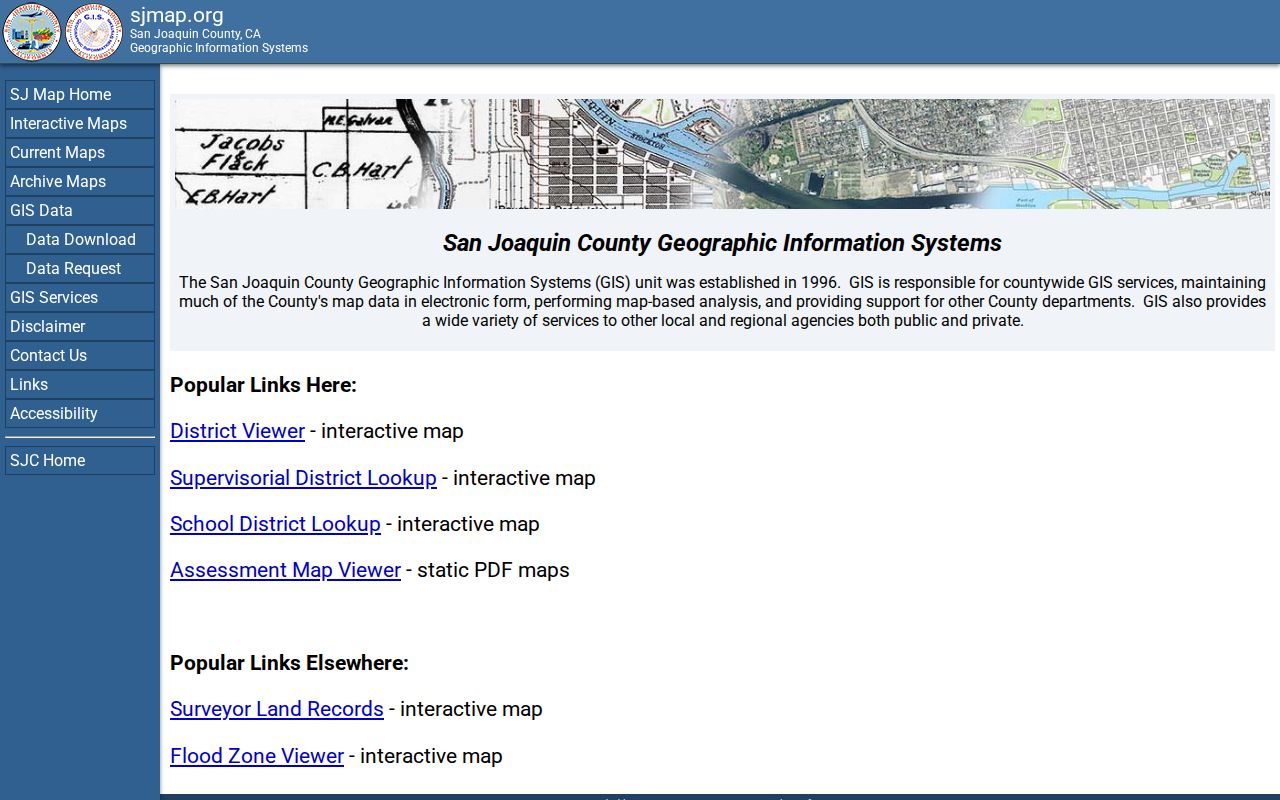
Use the map for orientation, then carry the APN into the Assessor and Recorder systems instead of treating the map label as a resident result.
The most reliable trail uses two independent matches. A case number can anchor a court result; an APN can anchor a parcel result; a spouse, occupation, address, or chronology can then confirm that the same person is involved. A shared surname and city are not enough. A narrow CPRA request to the custodian is better than asking an agency to invent a person history.
Note: A public record can provide a useful lead without proving a person’s current residence or identity.
Current San Joaquin County Directory Sources
Modern resident evidence is distributed across records that were created for different purposes. The Assessor and GIS connect parcel geography to assessment information. The Recorder connects grantors, grantees, document types, and dates. A voter file can include residential and mailing fields only for approved purposes, while My Voter Status authenticates the voter. City permits and planning files can name applicants, owners, contractors, and projects, but their coverage stops at the municipal boundary.
This directory table keeps “listed” separate from “living.” It is a route map for research, not a claim that every row names a household.
| Source | Evidence | Keeper | Access route |
|---|---|---|---|
| Assessor and GIS | APN, situs, values, map and roll fields | County Assessor/GIS | Public map, screen, counter, data request |
| Recorded instruments | Parties, legal description, date and document number | Recorder Division | Self-service, counter, copies |
| My Voter Status | Authenticated registration status and address service | California Secretary of State | Voter’s own identity-matched form |
| Approved voter file | Residence, mailing, precinct and party fields | Registrar/SOS | Qualified purpose, application and security terms |
| City permits and planning | Applicant, owner, contractor, project and inspection facts | Relevant city or county | Portal, counter, focused CPRA request |
For one person, the San Joaquin County resident lookup route adds court, vital, business, license, and historical checks. For a street, the parcel and deed chain deserve their own sequence rather than a name-only search.
San Joaquin County Recordkeeping From 1850 Forward
San Joaquin County was one of California’s original counties in 1850. The Historical Museum’s official county archives begin in 1850, Recorder research reaches 1851, and the verified city and county directory holdings begin in 1852. Stockton newspapers begin in 1850, while the 1895 Stockton Sanborn atlas offers an 85-sheet building snapshot between census years.
Those starts should not be collapsed into one date. Government archives, recorded instruments, privately published directories, newspapers, census schedules, maps, and modern parcel systems were built for different purposes. The resulting chain is stronger when each source is labeled by its keeper and coverage.
| 1850 | County archives begin; San Joaquin County becomes an original California county. |
|---|---|
| 1851 | Recorder research universe reaches the first documented recorded instruments. |
| 1852-1980 | Historical Museum directory span for city and county volumes. |
| 1895 | Stockton Sanborn atlas provides 85 sheets of street and building context. |
| 2015-present | Modern court access has a documented criminal-register boundary at October 19, 2015. |
San Joaquin County Assessor: Owner or Occupant?
The Assessor is often the cleanest starting point for an address, but its fields must be read in pairs. The situs address identifies where the parcel lies. The owner mailing address routes a tax notice. They can match, but neither field alone proves who occupies a building. Assessed values are assessment figures, not a promise of market price, and building characteristics date physical features without naming every household.
The official San Joaquin County Assessor resources emphasize parcel information, maps, forms, and contacts. The public landing pages did not verify unrestricted owner-name or ZIP-wide searching. Map browse is therefore valuable: find a parcel, record the APN, click nearby shapes, and take the APN into the appropriate record set.
- Parcel
- A mapped unit of land identified in the assessment system, usually by an APN.
- Situs address
- The location assigned to the parcel, distinct from the address used for mailing.
- APN
- An assessor’s parcel number that helps connect a map, assessment screen, and recorded legal description.
- Index
- A finding aid with fields such as party, date, type, or number, not necessarily the underlying image.
The county’s parcel image shows the visual entry point for that work.
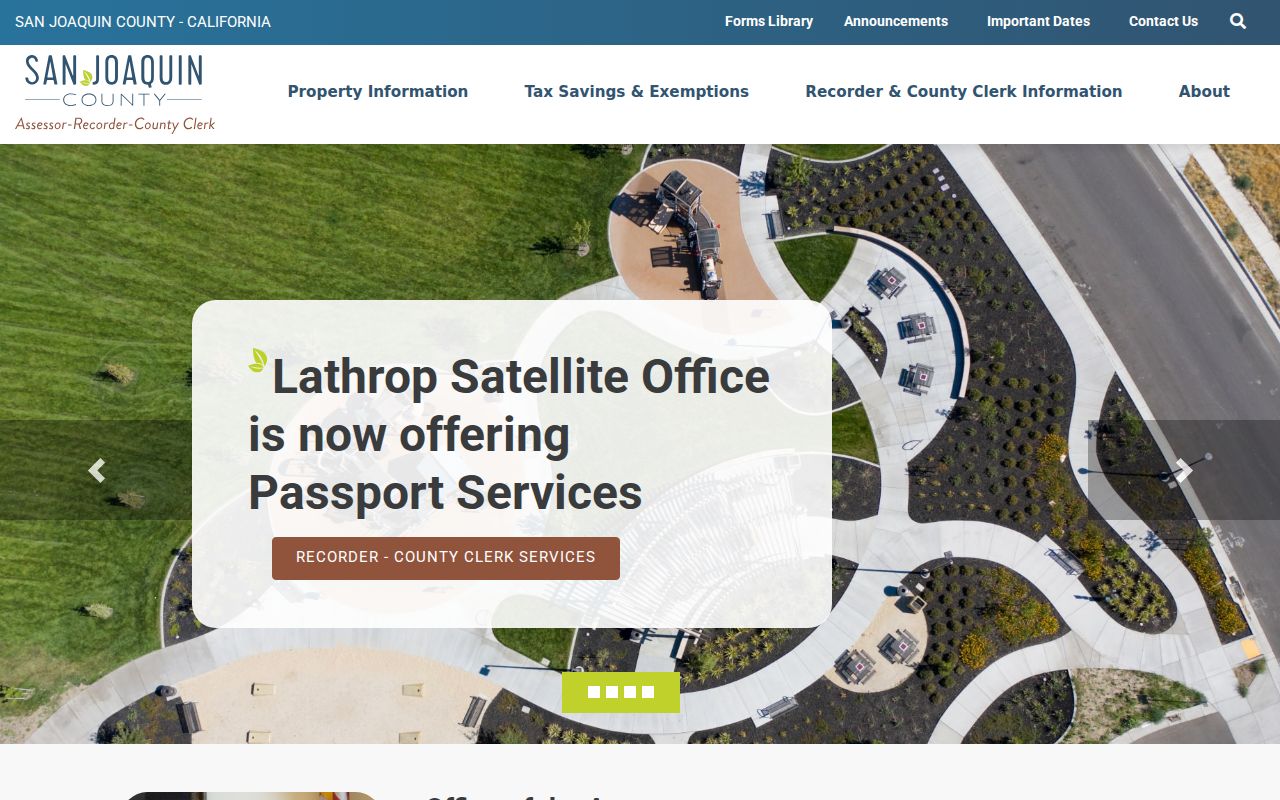
Use the map and screen to identify the record path, then ask the Assessor about a missing characteristic or priced extract instead of treating an absent field as proof of absence.
San Joaquin County Recorder Search Fields
The Recorder’s grantor-grantee index is a person trail through deeds, deeds of trust, liens, releases, maps, decrees, and other instruments. A grantor gives an interest; a grantee receives one. Search a current owner as grantee, record the seller and legal description, then test the seller as an earlier grantee. Streets change, but a legal description and map reference can keep the chain intact.
The county self-service portal is useful for current retrieval and applications, while the Recorder counter and phone line remain important for older books, copies, and questions about image availability. The complete 168-option document list and exact historical web-image cutoff were not exposed, so neither should be guessed.
| Field or mode | What to enter | Why it helps |
|---|---|---|
| Party or name | Grantor or grantee surname and variants | Find people tied to an instrument |
| Document number | Exact number after an index hit | Stabilizes retrieval and copy requests |
| Document type | One of the Recorder’s document categories | Narrows deeds, liens, maps, or releases |
| Recording date | Date or range | Separates common names and transfers |
| Book and page | Paired older reference | Bridges older index citations |
| Map mode | Map type, book, and page | Connects subdivision or plat context |
The Recorder’s published office page explains the 1851-forward research reach and current service channel.
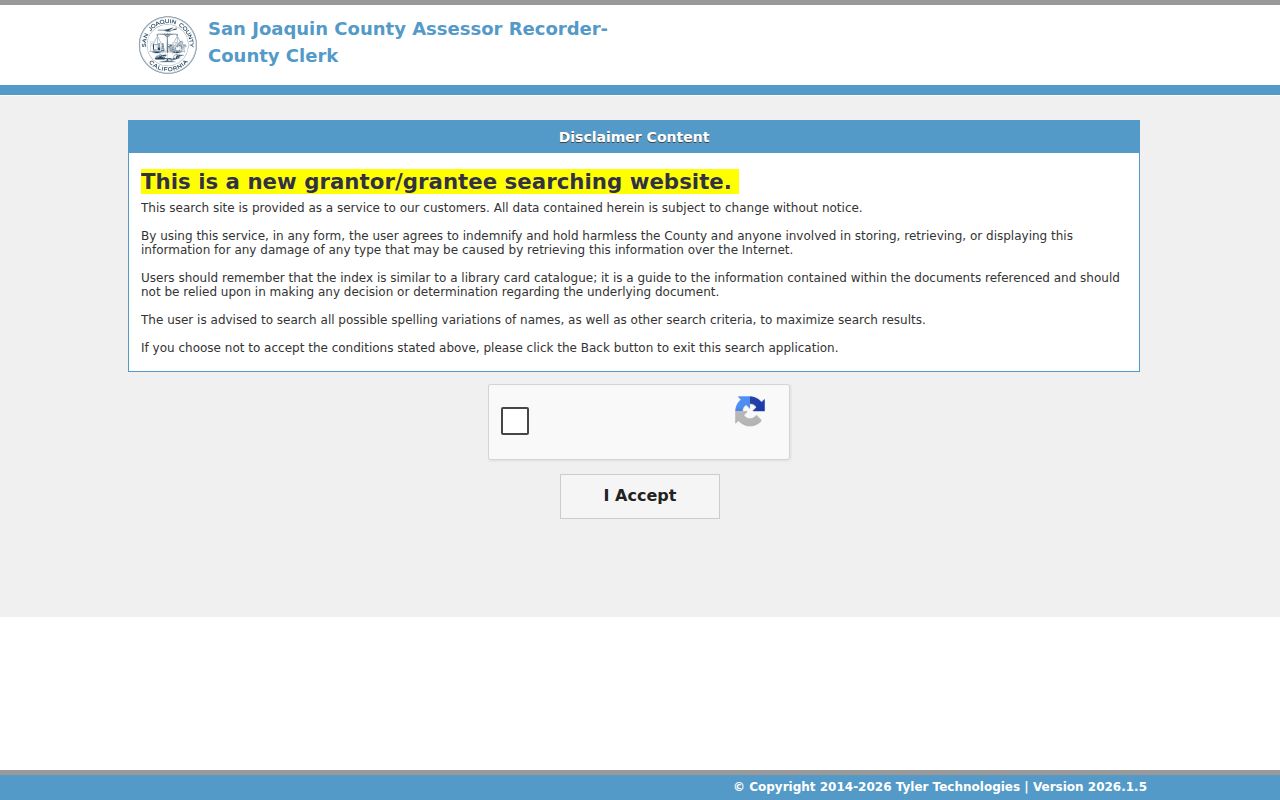
An index hit is a lead. Copies, certifications, redactions, military-discharge material, and confidential filings follow the custodian’s rules.
San Joaquin County Court Names Need Context
The Superior Court’s Case Management Search offers party-name and case-number routes. Remote party searches use first, middle, and last names and do not expose date of birth or driver-license information under California Rule of Court 2.507. Run variants separately, then anchor a result with a case number, date, party role, address clue, or another independent record.
The FullCourt public portal supplies index and calendar information, not a complete official case file. Criminal Registers of Actions before October 19, 2015 require onsite viewing or a Records Management request. Sealed, juvenile, adoption, confidential family, and restricted victim information remain limited even when a case number is known.
The live San Joaquin Superior Court search choices show why a name alone is a weak match.
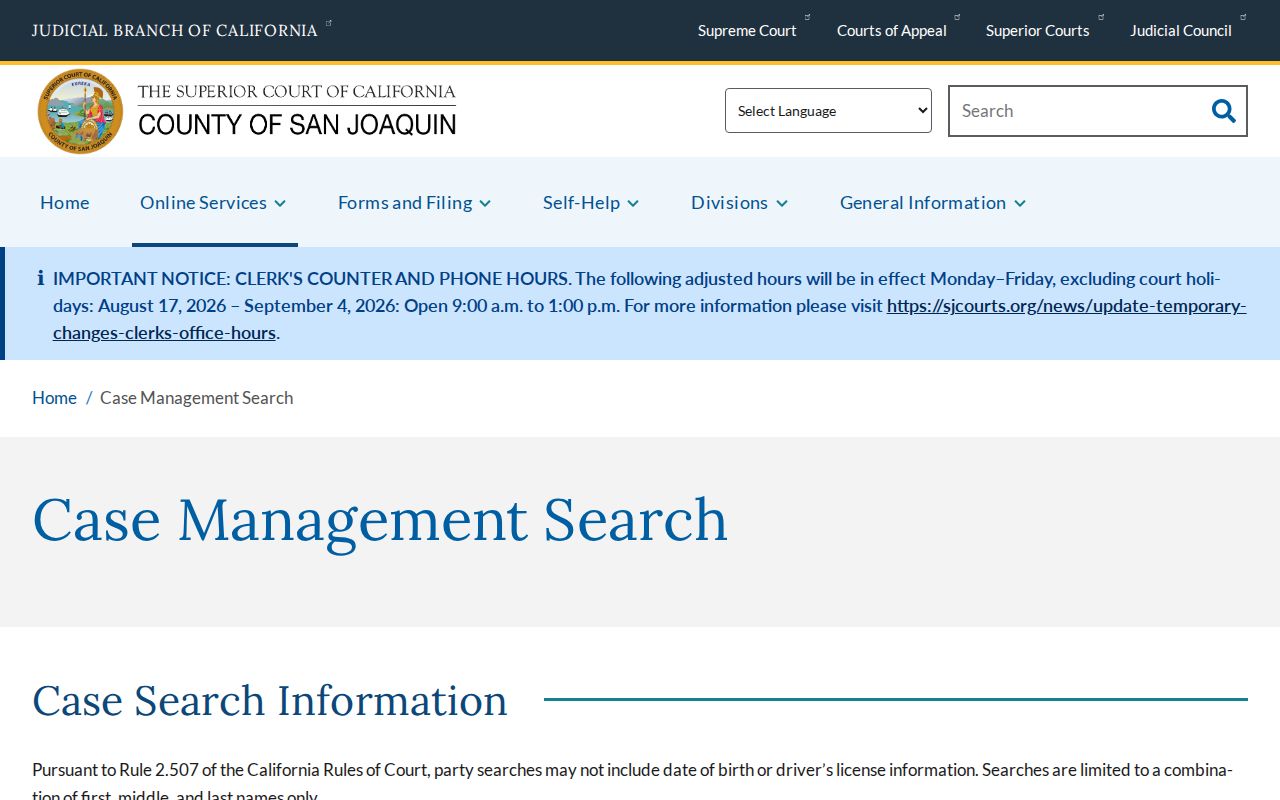
That court image belongs beside the parcel and historical evidence, never as a stand-alone identity claim.
| Index | Locator information such as case number, party role, filing date, events, and disposition when releasable. |
|---|---|
| Case file | Documents ordered or viewed through the court’s Records Management channel. |
| Safe match | Two independent clues, such as a case number plus a matching address or chronology. |
California Voter Records in San Joaquin County
My Voter Status is a protected self-lookup. It asks for first name, last name, date of birth, and either a California driver-license or ID number or the last four digits of a Social Security number, with alternative declarations when those identifiers are unavailable. A matched voter can see registration status, registered address, party preference, ballot status, polling place, and election information.
That is not a public San Joaquin County residents directory. Approved candidates, measure committees, and people using data for election, scholarly, journalistic, political, or governmental purposes can apply for a state or county file. The county application calls for intended use, security details, initials beside use and transfer terms, current photo ID, wet signature, and mail or in-person delivery. DL/ID, SSN fragments, signatures, minors’ preregistration, and confidential voters stay excluded.
The California voter status form demonstrates the identity-matched route.
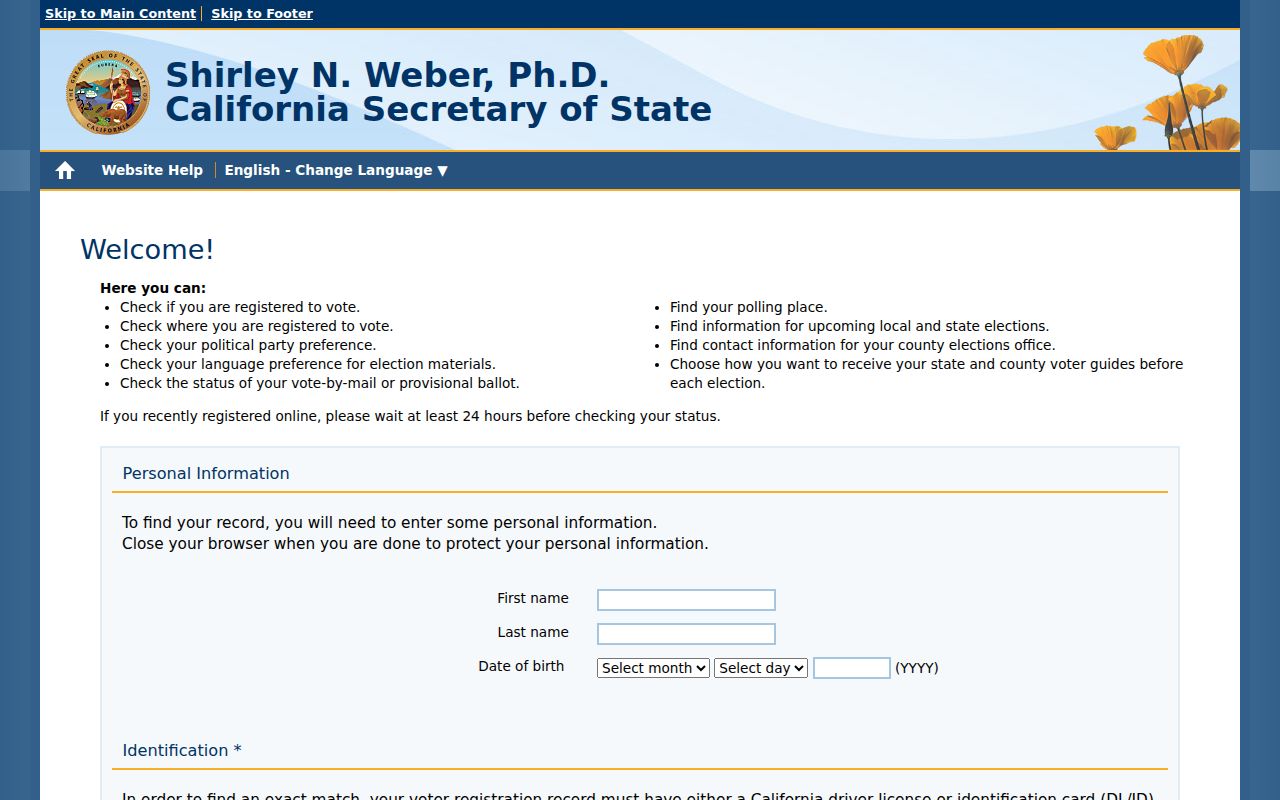
A non-match can reflect an identifier mismatch, recent registration, confidentiality, cancellation, or no registration. It is not proof that a person has never lived in the county.
Access limit. Voter information is supplied through the voter’s own authentication or a qualified application. Do not turn a restricted file into a casual street list.
San Joaquin County Vital Copy Routes
California uses authorized and informational certified copies rather than a simple rule that every record opens after a set number of years. The county Recorder issues county birth and death records for all years and public marriage records for licenses issued here. The local registrar handles the current year and one prior year. The County Clerk alone supplies confidential-marriage copies, which are limited to a spouse or court order under Family Code section 509. CDPH-VR is the statewide mail route from July 1905 for birth and death records and for its indexed marriage and dissolution years.
Authorized copies require the qualifying relationship or authority and a notarized sworn statement under Health and Safety Code sections 103525 through 103526.5. Informational copies are generally available but carry a legend and cannot establish identity. The 2026 state fees are search fees even when no record is found.
| Record | Local or state route | 2026 fee | Key limit |
|---|---|---|---|
| Birth | Recorder, local registrar, or CDPH | $31 | Authorized and informational choices differ |
| Death | Recorder, local registrar, or CDPH | $26 | Eligibility applies to authorized copies |
| Public marriage | Recorder or CDPH | $19 | License county matters |
| Confidential marriage | County Clerk | $19 | Spouse or court order |
| Dissolution certificate | CDPH for covered years | $18 | Not the Superior Court decree |
The California Department of Public Health vital-records page links the applications and copy rules.
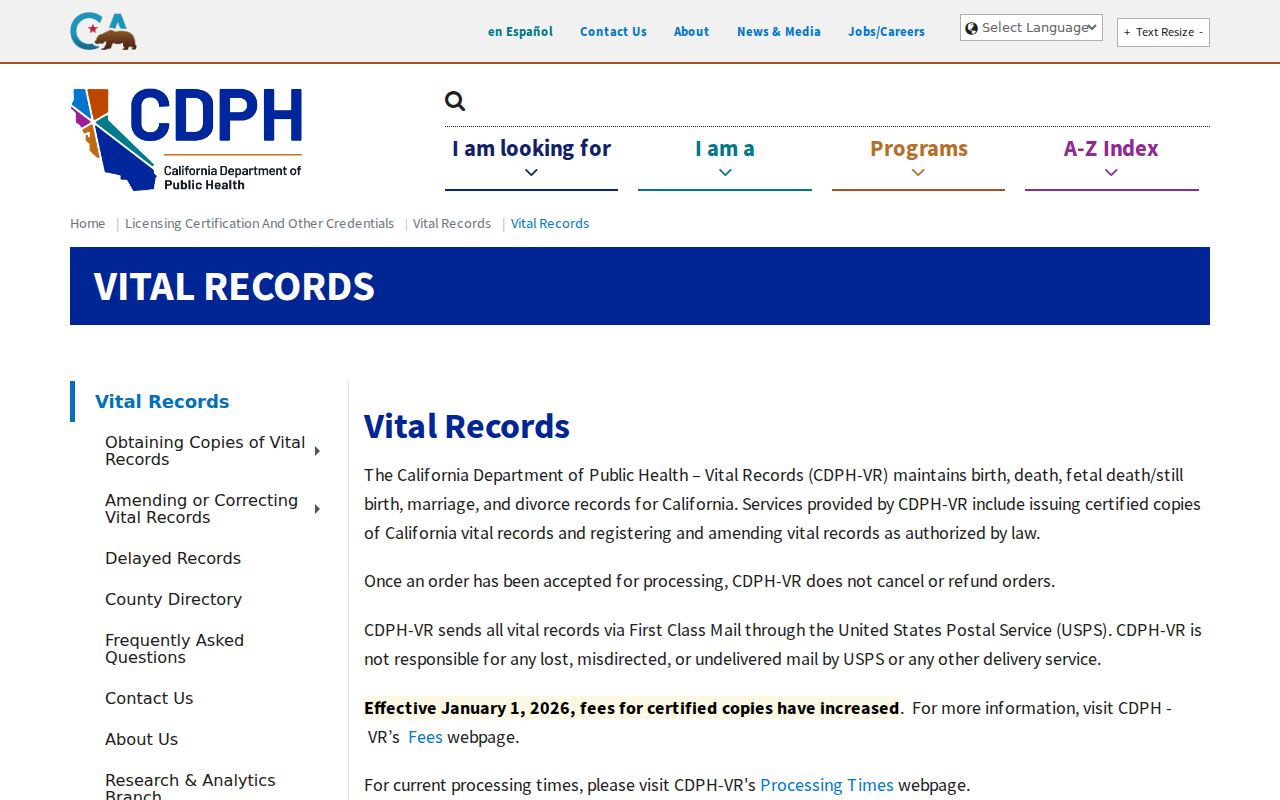
Historical newspapers, cemetery registers, church sources, county collections, and obituaries can supply a lead when a certificate is restricted, but the original custodian remains the authority.
When San Joaquin County Online Results Stop
Online access is a first channel, not the whole chain. The Recorder counter and phone line can clarify index, copy, and image questions. The Assessor counter can explain a map or a characteristic that is not on the public screen. The court courthouse terminal can expose material not displayed remotely, subject to sealing and confidentiality rules. Records Management handles deeper court searches and copy requests, including the CR-109-RM-1 form with advance payment and a stated $15 record-search fee.
For city permits, planning files, code cases, or business-license records, identify the city that has jurisdiction. A Stockton postal address may be outside Stockton’s municipal boundary. A focused California Public Records Act request should name the address or APN, record type, date interval, department, and preferred electronic format. The agency’s 10-calendar-day determination can be extended 14 days for unusual circumstances, and direct-copy costs may be recovered.
Note: A request for an existing index row or file is clearer than a request asking an agency to create a resident history.
Chavez Central San Joaquin County History
Chavez Central Library at 605 N. El Dorado Street in Stockton holds the non-circulating Local History Collection on the second floor. Stockton newspapers begin in 1850, and the library reports nearly complete microfilm holdings. Images can be viewed, printed, emailed, or saved to USB. The subject index covers many, but not all, years, and an obituary or vital-notice copy request can bridge a deceased resident to relatives and former addresses.
The genealogy collection has more than 1,500 reference books and 175 genealogy magazines. Library policy keeps local city directories, telephone directories, and high-school yearbooks for San Joaquin County communities. These sources often describe an occupant, spouse, occupation, or class connection that an ownership record misses.
Start with the Chavez Central local-history description before visiting, then ask staff which catalog or microfilm run fits the date.
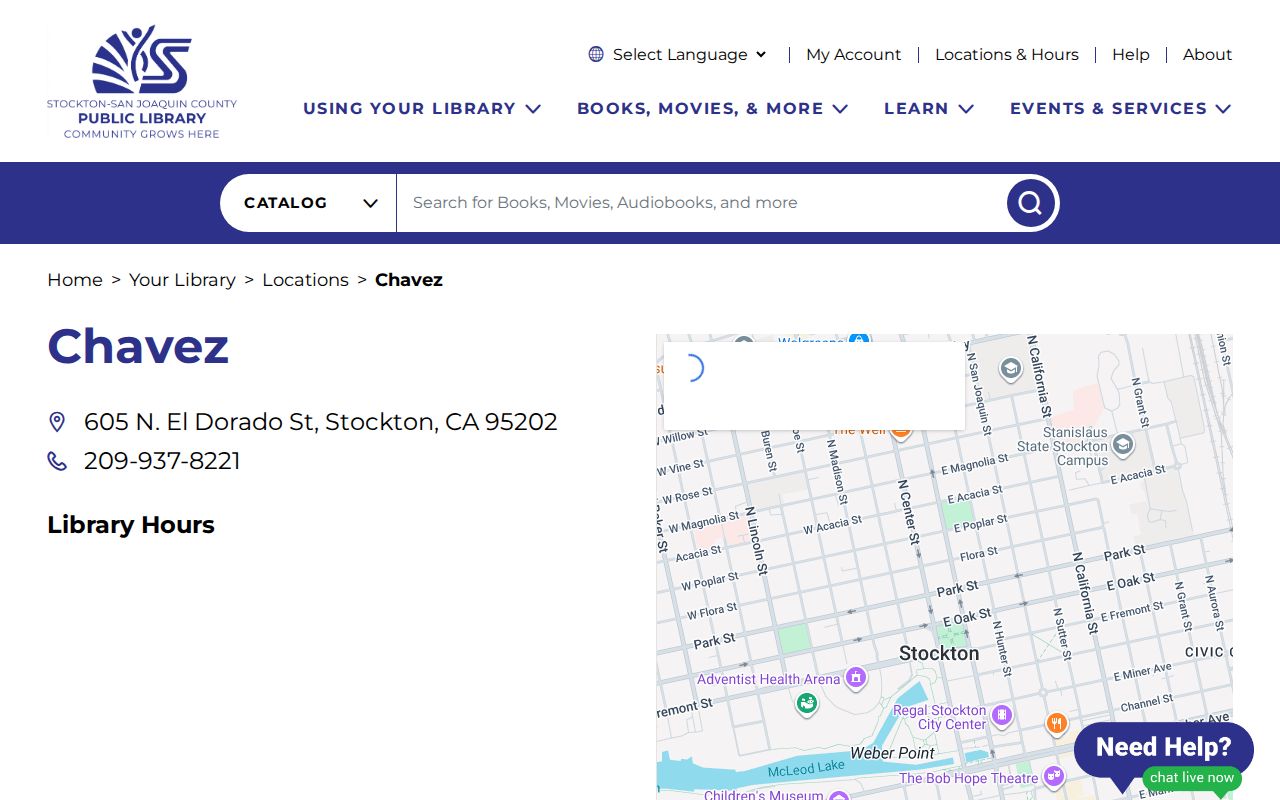
The library image marks a research counter and shelf, not a searchable current household roll.
Historical San Joaquin County Directory Shelves
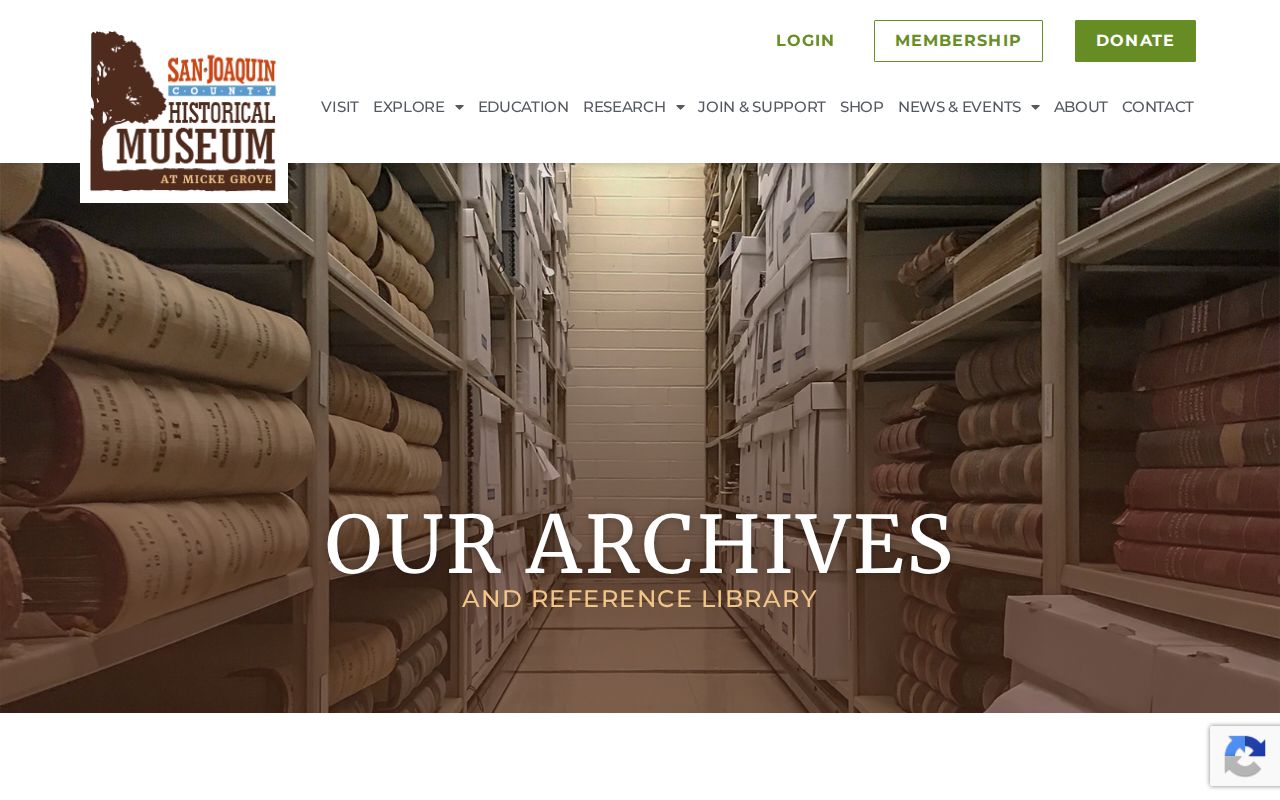
The San Joaquin County Historical Museum at Micke Grove Regional Park in Lodi holds the verified city and county directory span from 1852 through 1980 and official county archives from 1850 through 1990. Its non-circulating Gerald D. Kennedy Reference Library and archives are appointment-only; walk-ins are not accommodated. The holdings include assessment and plat books, vital statistics, marriage records, the Great Registry of Voters, maps, aerial photographs, and community collections.
Alphabetical entries can show a name, initials, spouse, occupation, residence or business address, and markers such as householder, rooms, or boards. The classified and criss-cross sections reverse the search from trade or address to a listed occupant. A directory year reflects the publisher’s canvass, not continuous occupancy. The deeper treatment belongs in the San Joaquin County city directory collections, where the shelf, sample entry, and household method can stay distinct from current parcel work.
The Historical Museum archive description points to the appointment-based custodian.
Its local records also preserve community histories that can restore names missing from a mainstream alphabetical directory.
San Joaquin County Common-Name Verification
A reliable lookup treats a name as a starting point. Preserve the form printed in the record, including an initial, a Spanish compound surname, a married or maiden form, an Asian name-order variant, or a missing diacritic. California began recognizing specified diacritical marks on modern vital certificates under AB 64, but older indexes may still omit them.
One hard locator and one independent match make a better pair than several weak matches. An APN can pair with a deed number. A case number can pair with a filing date and party role. A directory address can pair with an obituary, permit, or census household. A business filing can show an entity connection without proving that its agent lives at the filed address.
| Evidence type | Useful confirmation | What it cannot prove alone |
|---|---|---|
| Assessor parcel | APN, situs, roll name, map | Every occupant |
| Recorder index | Party role, instrument, date, legal description | Current residence |
| Court index | Case number, role, events, filing date | Identity without context |
| Directory entry | Historical address, spouse, work or household clue | Continuous occupancy |
Protected San Joaquin County Addresses
California Safe at Home gives eligible participants a substitute mailing address and confidential voter registration. Government Code sections 6205 through 6216 govern the program. It does not erase information that is already public, and real-property legal descriptions can still reveal a location. Participants can request substitution on certain deeds and change-of-ownership forms under section 6209.5, while vital certificates remain a special exception.
Voter residential and contact data are confidential to the general public under Government Code section 7924.000, subject to qualified Elections Code access. Recorded-document redaction rules do not mean that every underlying instrument disappears. A responsible San Joaquin County residents directory keeps these limits visible and routes a safety concern to the custodian or appropriate public-safety office.
Lawful personal use. Records can support genealogy, reconnecting, estate research, and civic work. Never use a name, address, or record trail to stalk, harass, intimidate, or harm anyone.
San Joaquin County Corrections and Requests
When a source is wrong, the correction belongs with the office that created or holds it. Ask the Assessor about an assessment field, the Recorder about an index or copy, the court about a docket or case file, the Registrar about a voter record, the library about a catalog entry, and the Historical Museum about an archive description. A commercial compilation can repeat an error after the official record is corrected, so the source chain matters.
California’s CPRA can request existing agency records, but exemptions still protect investigations, victims, juveniles, confidential information, and other restricted material. Keep requests narrow, ask for segregable portions, and retain the response. For scam or threat concerns, use the relevant police or sheriff channel, the California Attorney General consumer complaint route, or the published court or elections contact instead of publishing a private person’s details.
| Parcel or title issue | Assessor, Recorder, or relevant municipal custodian |
|---|---|
| Court index or copy | San Joaquin Superior Court Records Management |
| Historical name or address | Chavez Central or Historical Museum reference staff |
| Voter-file concern | Registrar of Voters or California Secretary of State |
The final check is simple: cite the custodian, preserve the date, and avoid claiming more than the record says.