
How San Joaquin County Residents Are Found
No single roll in San Joaquin County answers every resident question. Stockton, Lodi, Manteca, Tracy, Ripon, Escalon, Lathrop, and the unincorporated communities all exist. Some of those places keep records at the city level. The Assessor, Recorder, Superior Court, and Registrar of Voters serve the whole county. So start with the kind of fact you need. A parcel clue points toward GIS and assessment records. A former household points toward city directories, census schedules, newspapers, and deeds. A person's own registration status runs through California's authenticated voter form.
The official trail can link a name to a parcel. It can also reach a recorded instrument, a court case, a business filing, or an old address. It cannot turn an owner into a confirmed occupant. A directory entry reflects a publisher's canvass. A court index is not the case file itself. Keeping those distinctions straight matters. It makes a San Joaquin County residents directory work for genealogy, family history, reconnecting, and civic research.
- Use the county GIS map or Assessor resources to translate an address into an APN and situs.
- Follow the APN or legal description into the Recorder self-service portal.
- Use My Voter Status only for the voter’s own authenticated lookup, or qualify for a voter-file request.
- Test a name against the Superior Court index, vital-record route, business or license file, and historical collections that fit the question.
- Ask the actual custodian for a narrow request when the online result ends, keeping the address, APN, date range, and record type precise.
San Joaquin County Records Offices
Stockton is the county seat and the main counter stop. The Assessor-Recorder-County Clerk sits at 44 N. San Joaquin Street. Parcel work and recording work run in separate suites. Its Recorder Division researches 168 document types. They reach back to 1851. The Assessor supplies parcel maps, values, characteristics, and mailing and situs fields. The Registrar of Voters controls the approved voter-file route. My Voter Status is a self-service authentication tool rather than an open name list.
Each office answers a different question. A Recorder index shows a party to an instrument, not everyone in a house. An assessment screen describes land and its roll fields, not every occupant. Court and vital records follow separate rules entirely. Match the right office to the right clue. That is the core discipline of a San Joaquin County residents directory.
San Joaquin County Recorder
44 N. San Joaquin Street, Suite 260
Stockton, CA
209-468-3939
Recorder records and maps
San Joaquin County Assessor
44 N. San Joaquin Street, Suite 230
Stockton, CA
209-468-2630
Assessor property information
Registrar of Voters
44 N. San Joaquin Street
Stockton, CA
209-468-8683
County elections office
Documents that arrive by the published cutoff move through the Recorder the same day. Historical research still leans on counter indexes and books. The Assessor's public map and screen make good starting points. Priced roll extracts and property characteristics follow a different access path.
Here is the combined Assessor-Recorder-County Clerk information page in its own words and image. It includes the division's current service descriptions.
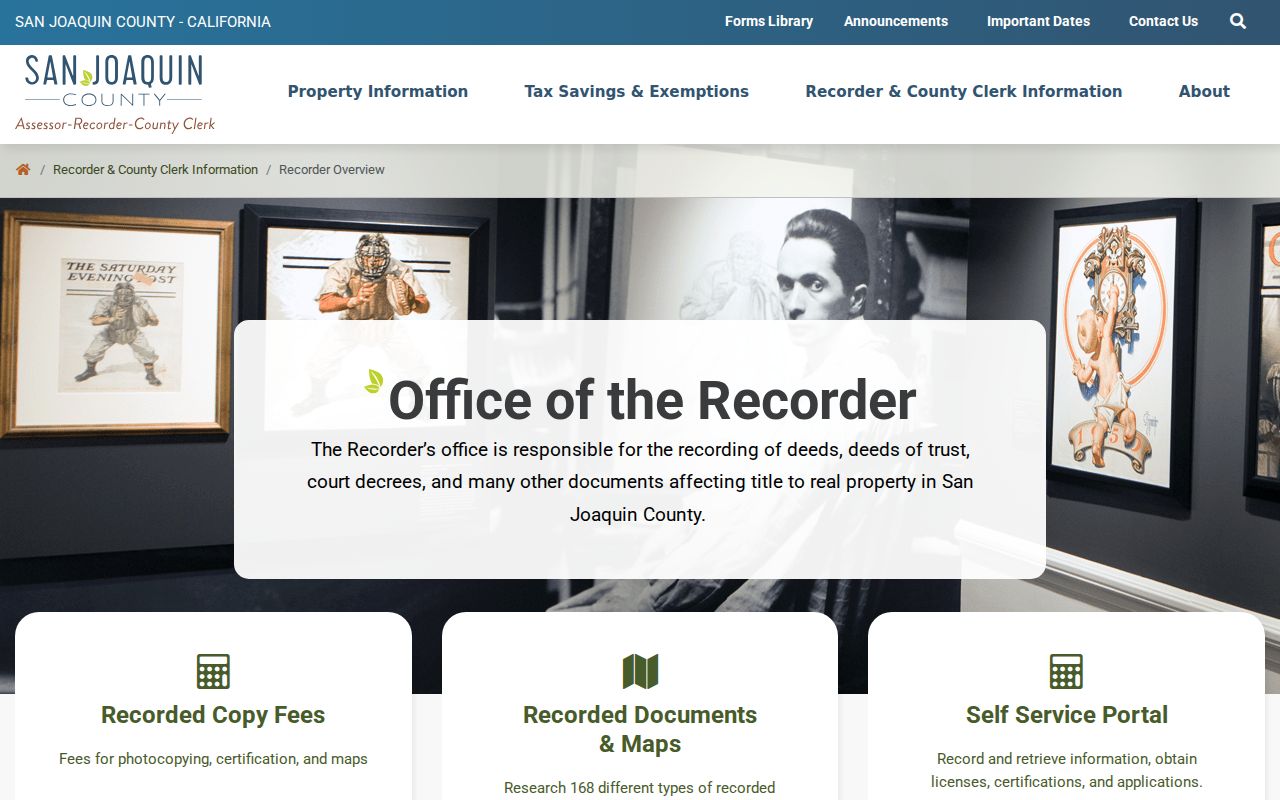
Note: The Recorder page is a signpost, not a substitute for checking the index, requesting a copy, or confirming any restriction with the custodian.
San Joaquin County Resident Search Clues
A name, a street, an APN, and an old address each demand a different first move. Got a street? Use the map to pin down the parcel before searching recorded parties. Got a person? Keep initials, hyphens, married and maiden forms, compound surnames, and diacritics intact. Got a business? Separate the filed entity address from a private residence. Got an older household? Try the library or museum shelf along with the deed trail.
The San Joaquin County GIS parcel map shows the first handoff from a street clue to an APN and a parcel boundary.
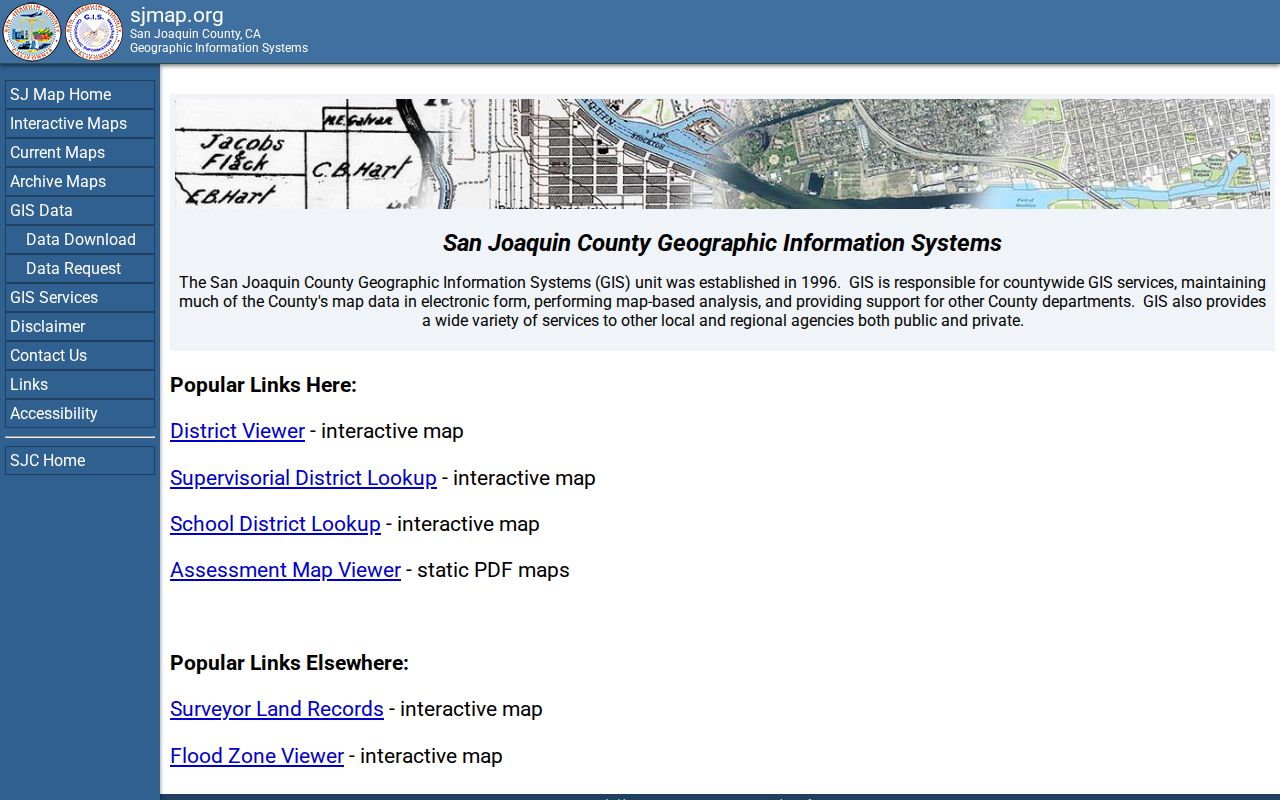
Treat the map as orientation. Then carry the APN into the Assessor and Recorder systems rather than reading a map label as a resident result.
The most reliable trail uses two independent matches. A case number can anchor a court result. An APN can anchor a parcel result. A spouse, occupation, address, or chronology can then confirm the same person sits behind both. A shared surname and city prove nothing. A narrow CPRA request to the custodian beats asking an agency to invent a person history.
Note: A public record can provide a useful lead without proving a person’s current residence or identity.
Current San Joaquin County Directory Sources
Current resident evidence sits scattered across records made for other purposes. The Assessor and GIS link parcel geography to assessment information. The Recorder links grantors, grantees, document types, and dates. A voter file can carry residential and mailing fields for approved purposes only. My Voter Status authenticates the voter. City permits and planning files can name applicants, owners, contractors, and projects. Their reach ends at the municipal boundary.
The directory table keeps "listed" separate from "living." Think of it as a route map for research. It is not a claim that every row names a household.
| Source | Evidence | Keeper | Access route |
|---|---|---|---|
| Assessor and GIS | APN, situs, values, map and roll fields | County Assessor/GIS | Public map, screen, counter, data request |
| Recorded instruments | Parties, legal description, date and document number | Recorder Division | Self-service, counter, copies |
| My Voter Status | Authenticated registration status and address service | California Secretary of State | Voter’s own identity-matched form |
| Approved voter file | Residence, mailing, precinct and party fields | Registrar/SOS | Qualified purpose, application and security terms |
| City permits and planning | Applicant, owner, contractor, project and inspection facts | Relevant city or county | Portal, counter, focused CPRA request |
For one person, the San Joaquin County resident lookup route adds court, vital, business, license, and historical checks. A street clue deserves its own parcel and deed sequence rather than a name-only search.
San Joaquin County Recordkeeping From 1850 Forward
San Joaquin County dates to 1850. It was among California's original counties, and its record-keeping traditions started almost immediately. The Historical Museum's county archives open in that same year. Recorder research reaches back to 1851. Verified city and county directory holdings begin in 1852. Stockton newspapers also start in 1850. The 1895 Stockton Sanborn atlas adds an 85-sheet building snapshot between census years.
These start dates deserve separate treatment. A residents directory, a parcel roll, a newspaper archive, and a recorded deed were each built for a different job. Each was kept by a different keeper. Collapsing them into one date blurs what each can actually tell you. The chain of evidence holds up best when every source carries its own label of keeper. That label should note its coverage too.
| 1850 | County archives begin; San Joaquin County becomes an original California county. |
|---|---|
| 1851 | Recorder research universe reaches the first documented recorded instruments. |
| 1852-1980 | Historical Museum directory span for city and county volumes. |
| 1895 | Stockton Sanborn atlas provides 85 sheets of street and building context. |
| 2015-present | Modern court access has a documented criminal-register boundary at October 19, 2015. |
San Joaquin County Assessor: Owner or Occupant?
The Assessor is usually the cleanest first stop for an address. Its fields, though, must be read in pairs. The situs address shows where the parcel sits. The owner mailing address tells a tax notice where to go. The two can match, but neither one alone proves who occupies a building. Assessed values are assessment figures rather than a promise of market price. Building characteristics date physical features without naming every household inside.
The official San Joaquin County Assessor resources center on parcel information, maps, forms, and contacts. The office publishes no unrestricted owner-name or ZIP-wide search on its public pages. Map browsing fills that gap well. Find a parcel and note the APN. Click the neighboring shapes, and carry that APN into the record set that needs it.
- Parcel
- A mapped unit of land identified in the assessment system, usually by an APN.
- Situs address
- The location assigned to the parcel, distinct from the address used for mailing.
- APN
- An assessor’s parcel number that helps connect a map, assessment screen, and recorded legal description.
- Index
- A finding aid with fields such as party, date, type, or number, not necessarily the underlying image.
The county’s parcel image shows the visual entry point for that work.
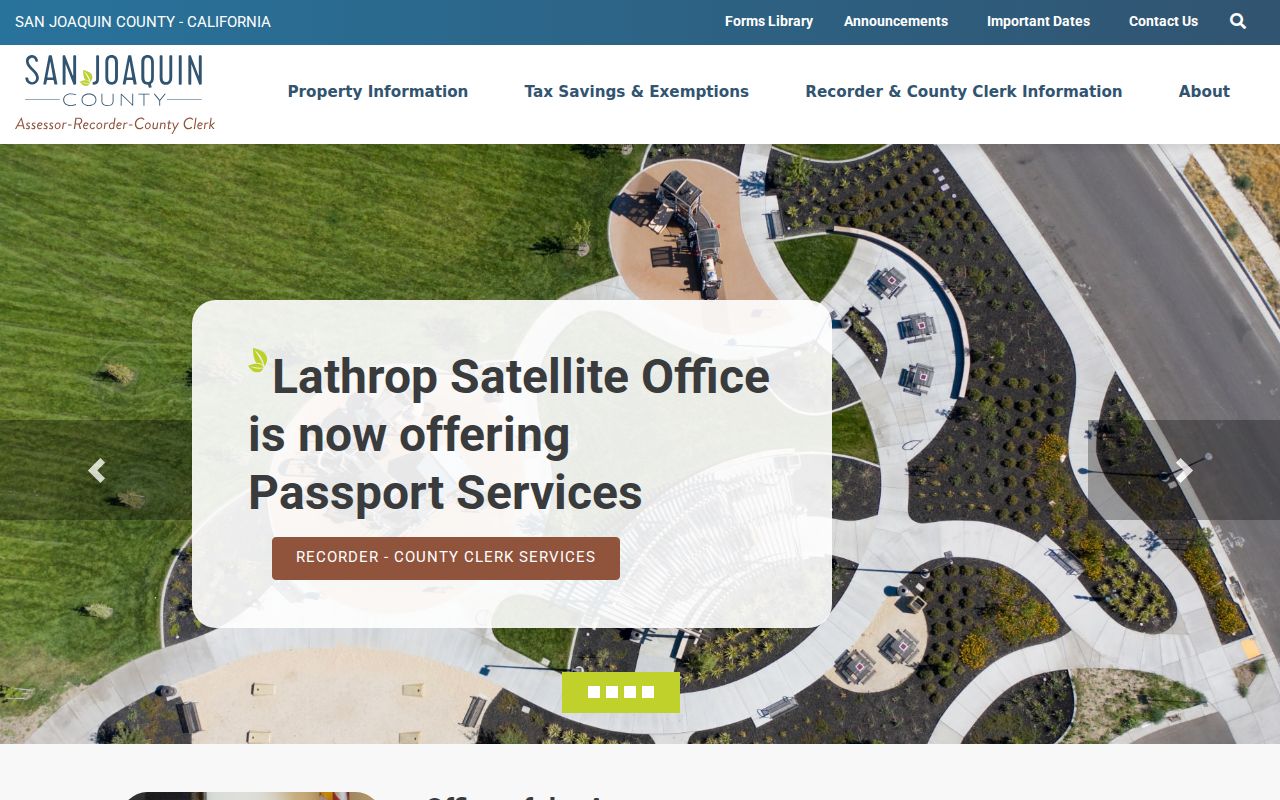
Let the map screen point you to the right record path. Then ask the Assessor directly about a missing characteristic or a priced extract, rather than reading an absent field as proof of absence.
San Joaquin County Recorder Search Fields
The Recorder's grantor-grantee index is a person trail. Deeds, deeds of trust, liens, releases, maps, and decrees all pass through it. A grantor gives an interest; a grantee receives one. Search the current owner as grantee first. Note the seller and the legal description. Then test that seller as an earlier grantee. Streets change names, but a legal description and map reference keep the chain intact.
The county's self-service portal handles current retrieval and applications well. Older books, copies, and image-availability questions still run through the Recorder counter and phone line. The county does not publish the full 168-option document list. It also does not publish the exact historical web-image cutoff. Guessing at either one wastes a trip.
| Field or mode | What to enter | Why it helps |
|---|---|---|
| Party or name | Grantor or grantee surname and variants | Find people tied to an instrument |
| Document number | Exact number after an index hit | Stabilizes retrieval and copy requests |
| Document type | One of the Recorder’s document categories | Narrows deeds, liens, maps, or releases |
| Recording date | Date or range | Separates common names and transfers |
| Book and page | Paired older reference | Bridges older index citations |
| Map mode | Map type, book, and page | Connects subdivision or plat context |
The Recorder’s published office page explains the 1851-forward research reach and current service channel.
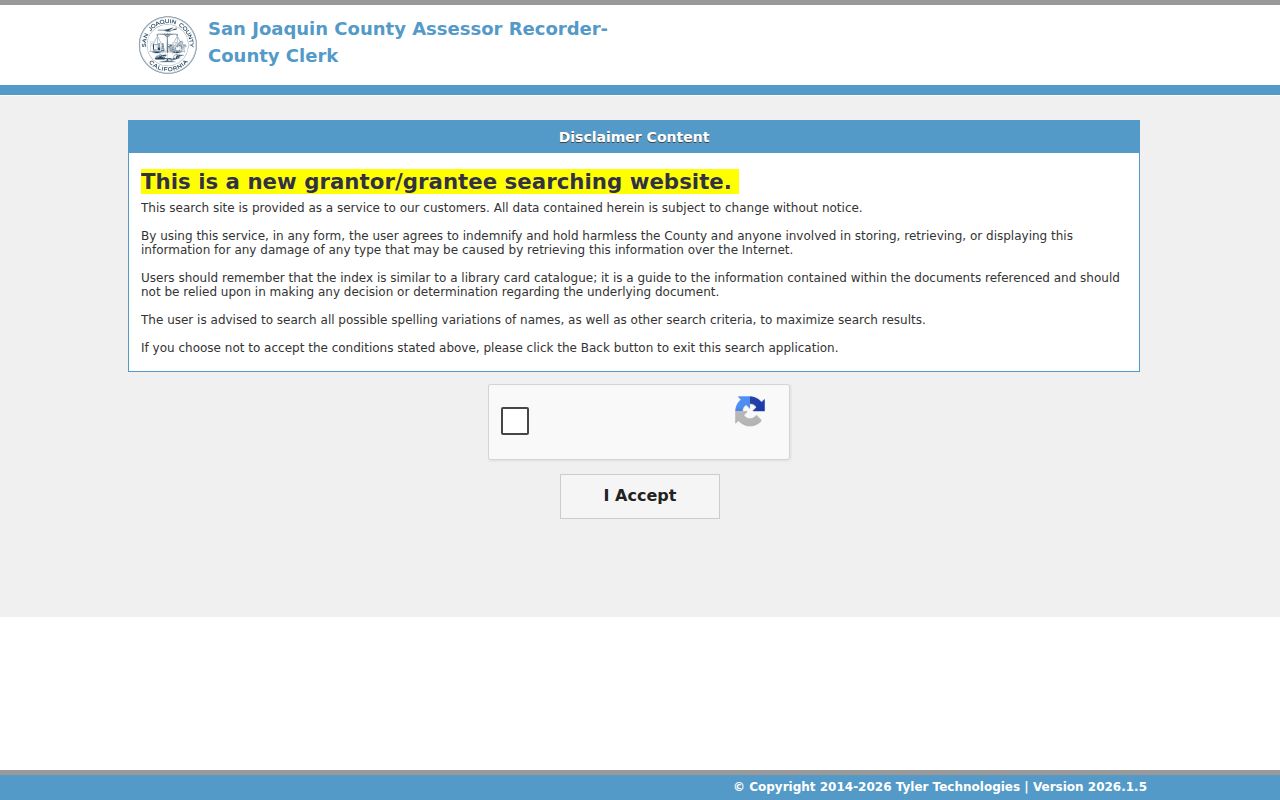
Note: An index hit is a lead, and copies, certifications, redactions, military-discharge material, and confidential filings all follow the custodian's rules.
San Joaquin County Court Names Need Context
The Superior Court's Case Management Search offers party-name and case-number routes in. Remote party searches use first, middle, and last names only. California Rule of Court 2.507 applies. Under that rule, they do not expose date of birth or driver-license information. Run name variants separately. Then anchor a result with a case number, a date, a party role, an address clue, or another independent record. The FullCourt public portal supplies index and calendar information, not a complete official case file. Criminal Registers of Actions before October 19, 2015 are the exception. Those require onsite viewing or a Records Management request. Sealed, juvenile, adoption, confidential family, and restricted victim information stay limited. Even a case number in hand does not unlock them. The live San Joaquin Superior Court search choices show the problem plainly. A name alone is a weak match. Context does the real work.
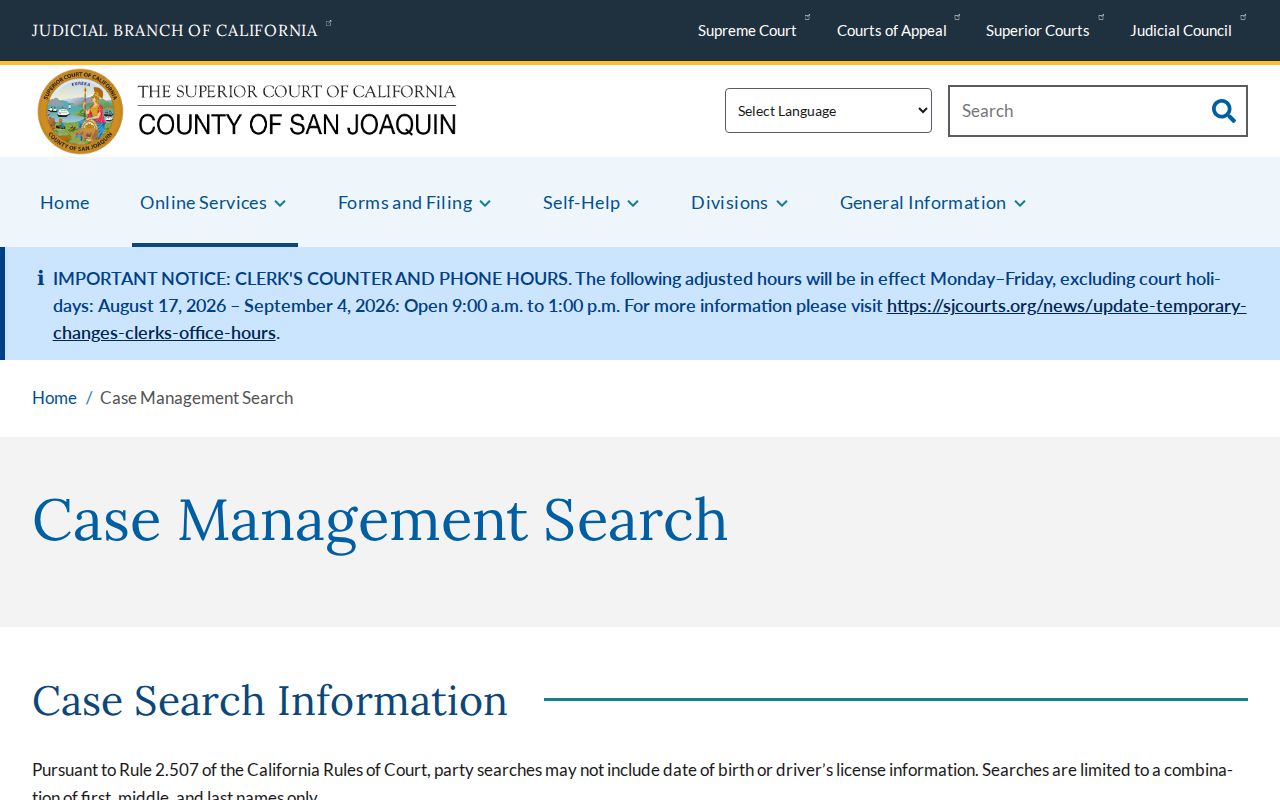
Note: A court result belongs beside parcel evidence and historical records, never standing alone as an identity claim.
| Index | Locator information such as case number, party role, filing date, events, and disposition when releasable. |
|---|---|
| Case file | Documents ordered or viewed through the court’s Records Management channel. |
| Safe match | Two independent clues, such as a case number plus a matching address or chronology. |
California Voter Records in San Joaquin County
My Voter Status is a protected self-lookup. It asks for first name, last name, date of birth, and either a California driver-license or ID number or the last four digits of a Social Security number. Alternative declarations cover people without those identifiers. A matched voter can view registration status, registered address, party preference, ballot status, polling place, and election information.
That is not a public San Joaquin County residents directory. Approved candidates, measure committees, and people with election, scholarly, journalistic, political, or governmental purposes may apply for a state or county file. The county application asks for intended use, security details, initials beside use and transfer terms, current photo ID, and a wet signature delivered by mail or in person. DL/ID numbers, SSN fragments, signatures, minors' preregistration, and confidential voters all stay out of the file. The California voter status form shows the identity-matched route in practice. Election records serve elections. They are not a street directory.
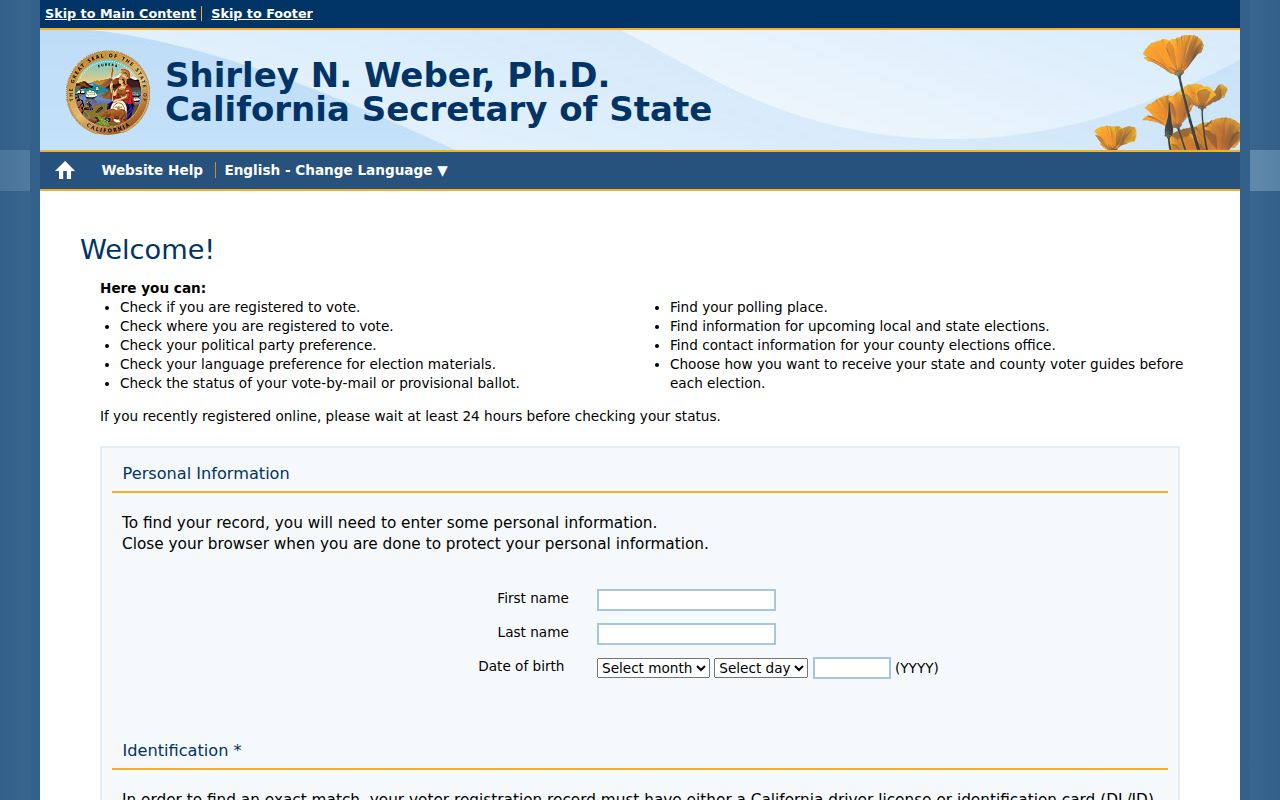
A non-match can mean several things. An identifier mismatch, a recent registration, confidentiality, cancellation, or no registration at all, but never proof that a person has not lived in San Joaquin County.
Access limit. Voter information is supplied through the voter’s own authentication or a qualified application. Do not turn a restricted file into a casual street list.
San Joaquin County Vital Copy Routes
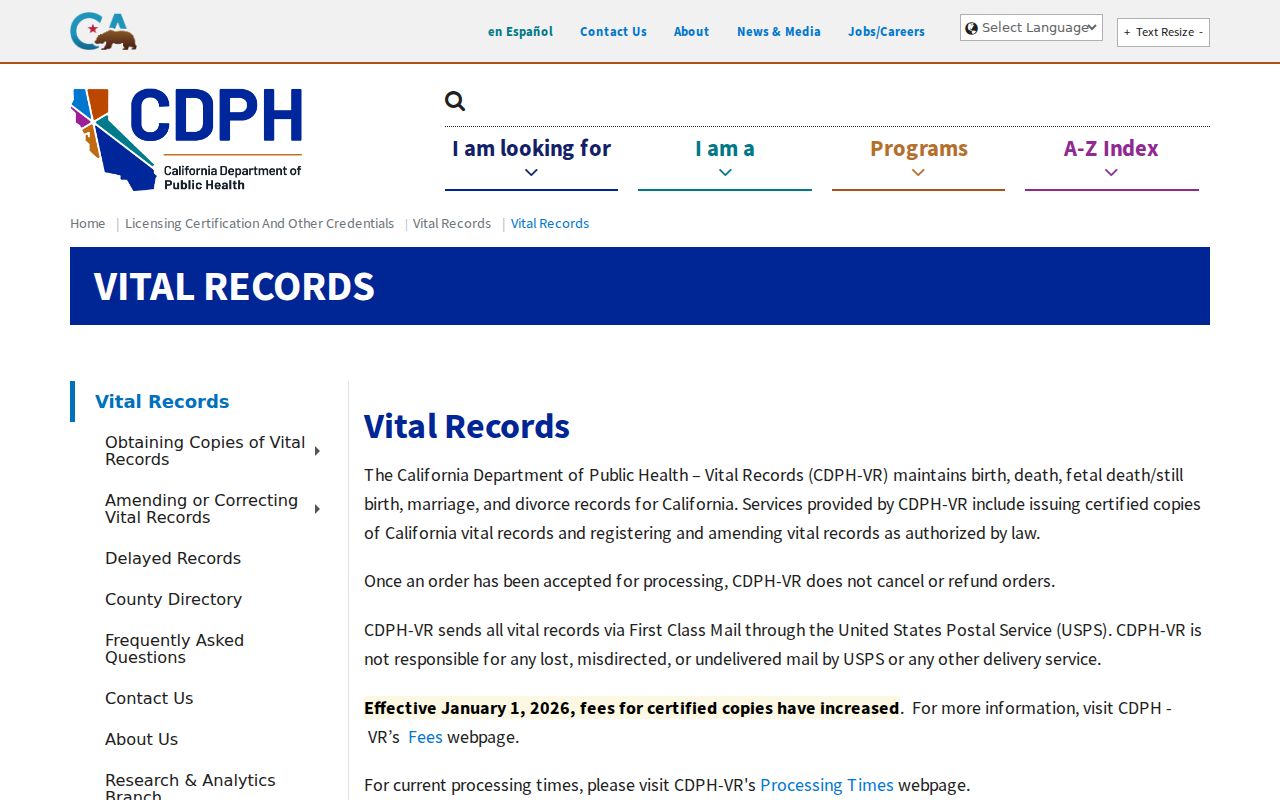
California splits certified copies into authorized and informational types. There is no simple rule that every record opens after a set number of years. The local registrar covers the current year and one prior year. The county Recorder issues county birth and death records for all years. Public marriage records for licenses issued here also come from the Recorder. Confidential-marriage copies come from the County Clerk alone. Access is limited to a spouse or a court order under Family Code section 509. CDPH-VR is the statewide mail route from July 1905. It serves birth and death records, plus its indexed marriage and dissolution years.
Authorized copies demand a qualifying relationship or authority. They also require a notarized sworn statement under Health and Safety Code sections 103525 through 103526.5. Informational copies are generally available. They carry a legend and cannot establish identity. The 2026 state fees are search fees, owed even when no record turns up.
| Record | Local or state route | 2026 fee | Key limit |
|---|---|---|---|
| Birth | Recorder, local registrar, or CDPH | $31 | Authorized and informational choices differ |
| Death | Recorder, local registrar, or CDPH | $26 | Eligibility applies to authorized copies |
| Public marriage | Recorder or CDPH | $19 | License county matters |
| Confidential marriage | County Clerk | $19 | Spouse or court order |
| Dissolution certificate | CDPH for covered years | $18 | Not the Superior Court decree |
The California Department of Public Health vital-records page links the applications and copy rules.
Historical newspapers, cemetery registers, church sources, county collections, and obituaries can supply a lead when a certificate is restricted. Still, the original custodian remains the authority on what the record says.
When San Joaquin County Online Results Stop
Online results only take you so far. The Recorder's counter and phone line answer questions that a screen cannot, from index entries to copies and images. The Assessor's office fills gaps too, explaining map details or parcel characteristics hidden from public view. Court records follow the same pattern. A courthouse terminal sometimes shows material kept off remote access, though sealing and confidentiality rules still apply. For deeper court digging, Records Management takes search and copy requests, using the CR-109-RM-1 form with advance payment and a stated $15 record-search fee.
City records demand a different habit. Figure out which city actually holds jurisdiction first. A Stockton postal address can sit outside Stockton's municipal boundary. Then write a focused California Public Records Act request that names the address or APN, the record type, the date interval, the department, and your preferred electronic format. The agency has 10 calendar days to respond. Unusual circumstances can stretch that window by 14 days. Direct-copy costs may also be recovered.
Note: A request for an existing index row or file is clearer than a request asking an agency to create a resident history.
Chavez Central San Joaquin County History
On Stockton's second floor of the Chavez Central Library at 605 N. El Dorado Street sits a non-circulating Local History Collection. Stockton newspapers reach back to 1850, and microfilm holdings are nearly complete. Patrons can view, print, email, or save images to USB. A subject index covers many years, though not all. An obituary or vital-notice copy request can still bridge a deceased resident to relatives and former addresses. That makes the shelf a quiet workhorse for any San Joaquin County residents directory search.
The genealogy side is strong too. More than 1,500 reference books and 175 genealogy magazines anchor it. Library policy also keeps local city directories and telephone directories. It preserves high-school yearbooks for San Joaquin County communities as well. These often describe a spouse, occupation, or class tie that an ownership record misses entirely. Read the Chavez Central local-history description before a visit. Then ask staff which catalog or microfilm run fits your date.
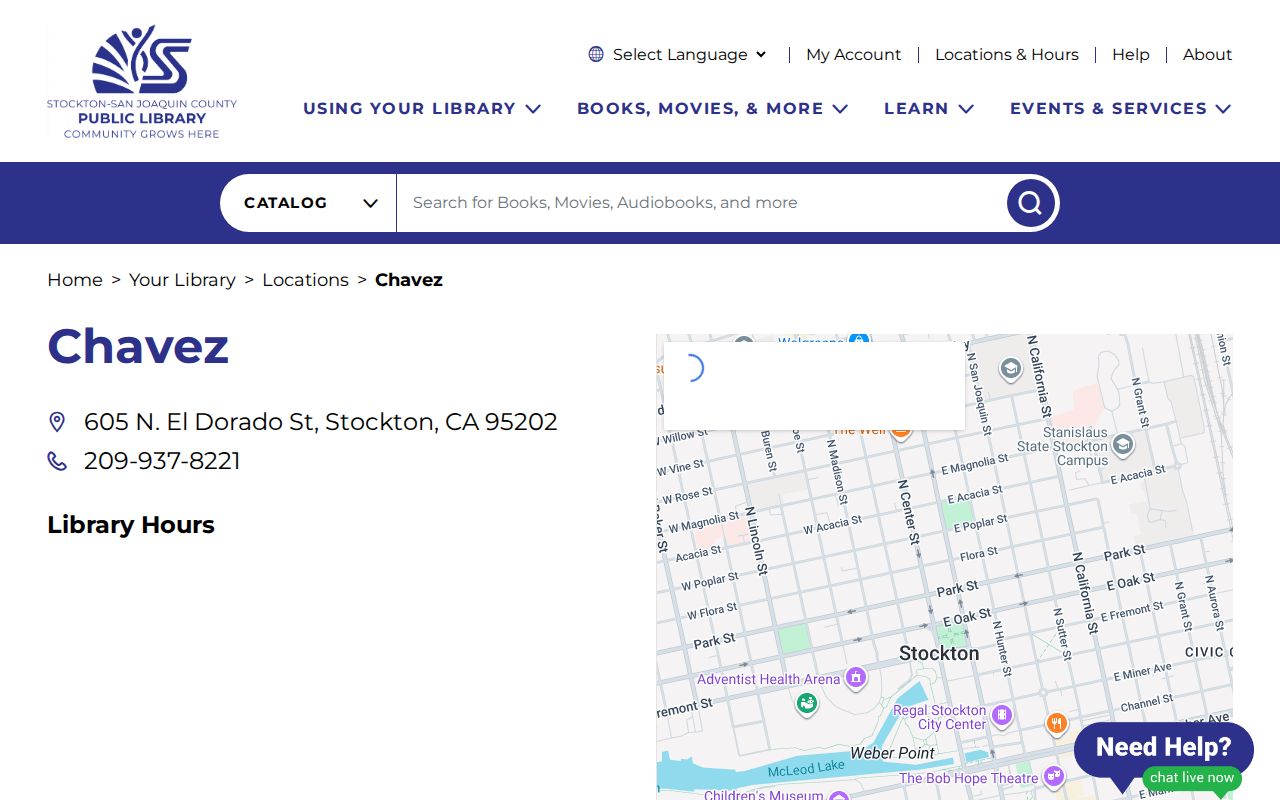
The library image marks a research counter and shelf, not a searchable current household roll for the residents directory.
Historical San Joaquin County Directory Shelves
The San Joaquin County Historical Museum sits at Micke Grove Regional Park in Lodi. It keeps the verified city and county directory span from 1852 through 1980. Its official county archives run from 1850 through 1990. The non-circulating Gerald D. Kennedy Reference Library and archives operate by appointment only; walk-ins are not accommodated. Holdings span assessment and plat books, vital statistics, marriage records, the Great Registry of Voters, maps, aerial photographs, and community collections. For a residents directory built from history, that depth is hard to beat.
Alphabetical entries can show a name, initials, spouse, and occupation. They may list a residence or business address too, along with markers like householder, rooms, or boards. The classified and criss-cross sections flip the lookup. They run from trade or address back to a listed occupant. Remember that a directory year reflects the publisher's canvass, not continuous occupancy. The San Joaquin County city directory collections page gives the deeper treatment. It keeps the shelf and household method distinct from current parcel work. The Historical Museum archive description points to the appointment-based custodian.
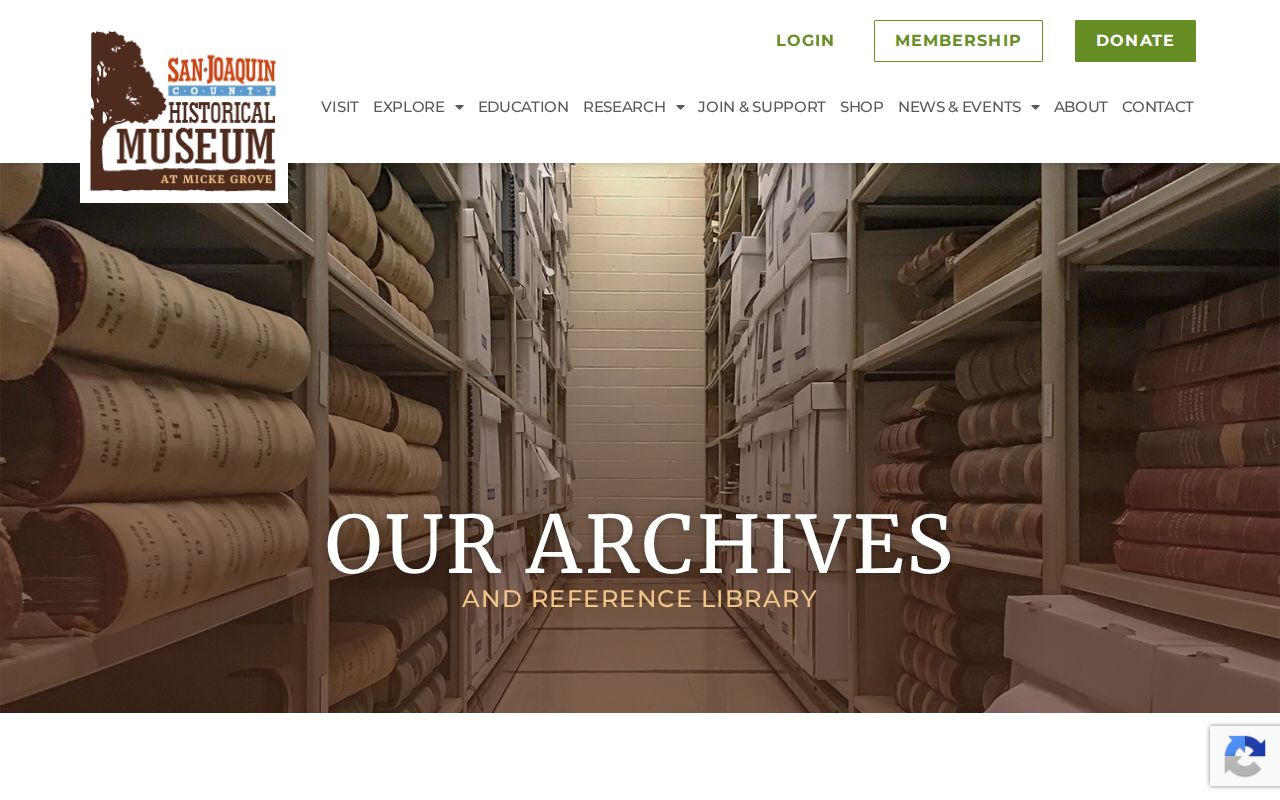
Its local records also preserve community histories that can restore names missing from a mainstream alphabetical directory entry.
San Joaquin County Common-Name Verification
In the San Joaquin County residents directory, a name is only the opening move. Keep it exactly as the record prints it. That may mean a middle initial. It may be a Spanish compound surname, a maiden or married form, an Asian name-order variant, or a dropped diacritic. California began allowing certain diacritical marks on modern vital certificates under AB 64. Older indexes still omit them.
Pair one strong locator with one independent match rather than stacking weak matches. An APN pairs well with a deed number. A case number pairs with a filing date and a party role. A street directory address can line up with an obituary. It can also match a permit, or a census household. A business filing may reveal an entity tie. Yet it never proves the agent lives at the filed address.
| Evidence type | Useful confirmation | What it cannot prove alone |
|---|---|---|
| Assessor parcel | APN, situs, roll name, map | Every occupant |
| Recorder index | Party role, instrument, date, legal description | Current residence |
| Court index | Case number, role, events, filing date | Identity without context |
| Directory entry | Historical address, spouse, work or household clue | Continuous occupancy |
Protected San Joaquin County Addresses
Treat a name as a starting point, not an answer. Keep the form the record itself prints. That may mean an initial, a Spanish compound surname, a married or maiden form, an Asian name-order variant, or a missing diacritic. California began recognizing specified diacritical marks on modern vital certificates under AB 64. But older indexes may still drop them.
Pairing beats piling up weak matches. One hard locator plus one independent match goes further than several maybes. An APN can pair with a deed number. A case number can pair with a filing date and party role. A directory address can pair with an obituary, permit, or census household. A business filing can show an entity connection. That does not prove its agent lives at the filed address.
Lawful personal use. Records can support genealogy, reconnecting, estate research, and civic work. Never use a name, address, or record trail to stalk, harass, intimidate, or harm anyone.
San Joaquin County Corrections and Requests
An error in a record gets fixed by the office that holds it. The Assessor handles assessment fields. The Recorder handles indexes and copies. Courts handle dockets and case files, the Registrar handles voter rolls, the library handles catalog entries, and the Historical Museum handles archive descriptions. A commercial compilation can keep repeating a mistake long after the official record changes, so the source chain matters.
California's CPRA lets you request existing agency records. Exemptions still shield investigations, victims, juveniles, confidential information, and other restricted material. Keep each request narrow. Ask for segregable portions and keep the response. For scams or threats, use the police or sheriff channel, the California Attorney General consumer complaint route, or a published court or elections contact rather than posting a private person's details.
| Parcel or title issue | Assessor, Recorder, or relevant municipal custodian |
|---|---|
| Court index or copy | San Joaquin Superior Court Records Management |
| Historical name or address | Chavez Central or Historical Museum reference staff |
| Voter-file concern | Registrar of Voters or California Secretary of State |
Cite the custodian, preserve the date, and claim nothing beyond what the record actually says. That habit keeps every San Joaquin County residents directory lookup honest.